Air vs Sea Freight for Green Coffee Beans: 2026 Cost Guide
When a specialty roaster in Dubai calls on Tuesday needing two tonnes of unroasted coffee by Friday, the freight decision stops being a back-office detail—it becomes the difference between winning a year-long contract and losing a client. For international buyers of Indonesian green coffee beans, choosing between air freight and sea freight in the 2026 season demands a sharp understanding of cost, speed, and product integrity. TasikSpice, an Indonesian spice and coffee exporter from the Tasikmalaya highlands of West Java, regularly helps partners in the Middle East, South Asia, and Europe calculate exactly which mode protects both their timelines and their margins.
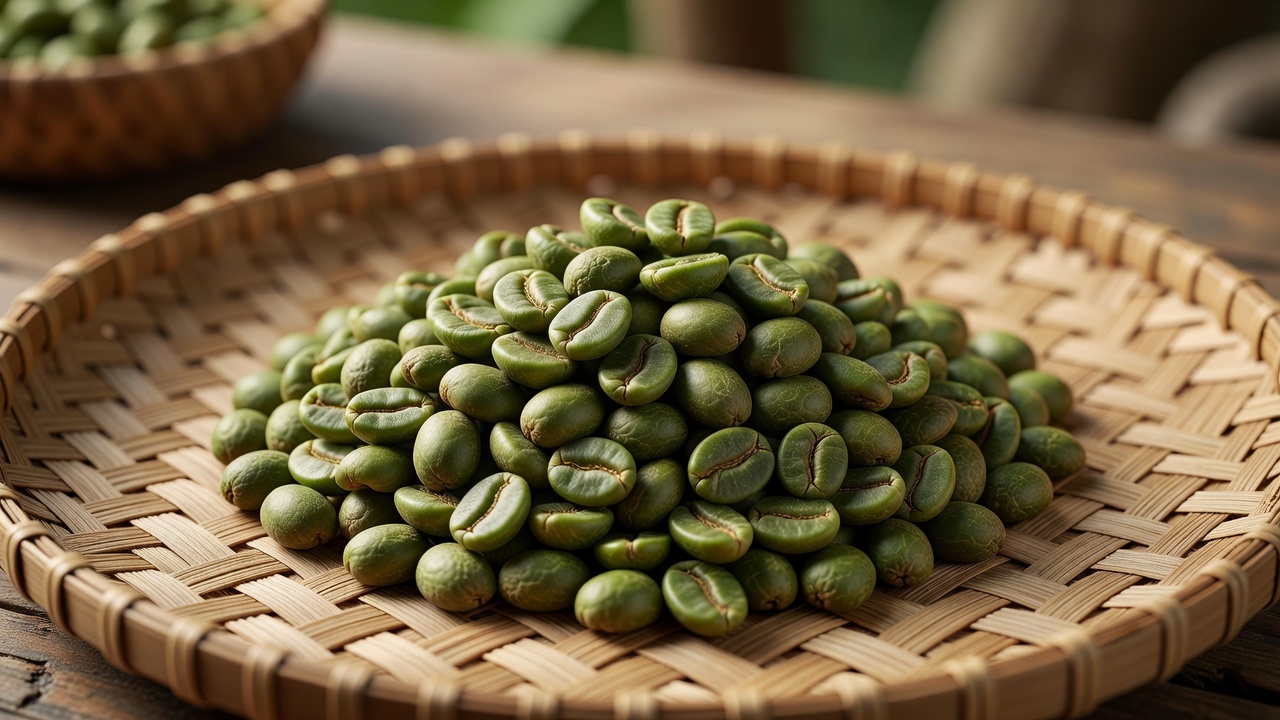
Known locally as kopi biji hijau, these unroasted coffee beans travel from highland farms in Java and Sumatra to FOB Tanjung Priok, Jakarta, before entering global logistics. The decision between air and sea freight is not simply about price per kilogram; it is about inventory strategy, roast freshness windows, and the grade of Arabica or Robusta coffee you are buying.
Cost Drivers: Air Freight vs Sea Freight for Green Coffee Beans
Green coffee beans are dense, hygroscopic, and often shipped in 60 kg jute or GrainPro bags. These physical traits directly influence freight economics. As of August 2026, TasikSpice’s export desk tracks the following indicative ranges for shipments departing Jakarta:
- Chargeable weight: Air cargo rates apply to actual or volumetric weight, whichever is higher. Well-palletized green coffee can achieve a volume-to-weight ratio that keeps air freight viable for urgent micro-lots.
- Indicative air freight cost: Jakarta (Soekarno-Hatta) to Dubai, Jeddah, or Rotterdam typically runs USD 3.50–5.50 per kg for green coffee beans in 2026, depending on fuel surcharges, security screening, and booking class.
- Indicative sea freight cost: FCL from Tanjung Priok to Jebel Ali or Rotterdam ranges around USD 0.18–0.35 per kg for a 20-foot container carrying 19–21 metric tons. LCL rates are higher per kg but suit smaller volumes.
- Transit times: Air freight is 2–4 days door-to-door; sea freight is 16–28 days to the Middle East and Europe, and 5–10 days to South Asia.
These figures are directional and shift with carrier capacity and the 2026 peak season. A live quotation is always recommended before committing to an Arabica coffee export contract.
When Air Freight Protects Your Arabica Coffee Export Margins
Air freight is not automatically wasteful. For high-value specialty Arabica lots—especially natural process or honey process micro-lots from Gayo or West Java—airfreight can preserve a premium that far outweighs the added logistics cost. A European buyer paying USD 12–18 per kg for 400 kg of competition-grade unroasted coffee will not blink at USD 4 per kg in air freight if it means the beans arrive before a festival or a limited-release roast date.
Air freight also makes sense for:
- Pre-shipment samples of 5–20 kg that buyers need to cup and approve before authorizing a full FCL sea freight order.
- Urgent replenishment when a roaster’s inventory of a popular Robusta coffee blend runs dry during Ramadan or Christmas retail peaks.
- First contracts where trust is still building; a fast, intact air delivery can secure a recurring sea freight program for the next 12 months.
For these scenarios, TasikSpice consolidates beans into triple-layer packaging—food-grade polyethylene, GrainPro barrier liner, and jute outer—so that unroasted coffee arrives without moisture damage, mold, or foreign matter, even under air cargo’s pressure and temperature swings.
Sea Freight for Volume: Robusta Coffee and Bulk Arabica Shipments
Once order size climbs above 5 metric tons, sea freight becomes the logical engine of an Indonesian green coffee beans supply chain. A 20-foot FCL typically loads 320–350 jute bags (19–21 MT), while a 40-foot container can double that. For Robusta coffee destined for instant coffee manufacturers or commercial blends, sea freight’s low cost per kg is essential to remaining competitive against Vietnam and Brazil.
Sea freight also allows longer pre-sailing preparation: TasikSpice can consolidate green beans from multiple farmer groups in Java and Sumatra, perform pre-shipment inspection, fumigation, and phytosanitary certification without rush fees. The 2026 season has seen stable container availability from Jakarta, though buyers should still allow 7–10 days for booking and stuffing during peak export months (June–September).
A strategic hybrid approach is often best: ship one FCL by sea for base inventory, and top up urgent gaps with a 200–500 kg airfreight parcel. This keeps landed cost per kg low while protecting against stock-outs.
Packaging, Documentation, and TasikSpice’s FOB Tanjung Priok Advantage
Freight mode is only half the equation. For green coffee beans—whether Arabica coffee export or Robusta coffee for industrial use—proper packaging and export documents prevent costly delays at destination. TasikSpice supplies:
- New jute bags with food-grade poly liners, or GrainPro hermetic bags for moisture and oxygen control.
- Palletization and shrink-wrapping for air freight, or slip sheets for sea freight to maximize container cube.
- Full export documentation: commercial invoice, packing list, certificate of origin (Form E / Form A where applicable), phytosanitary certificate, and quality analysis certificate.
All shipments are quoted FOB Tanjung Priok, Jakarta, meaning TasikSpice manages inland trucking from Tasikmalaya, export clearance, and terminal handling until the goods are on board. Buyers then arrange freight (or we can recommend a forwarder), making freight mode comparison transparent.
Need a side-by-side air vs sea freight cost analysis for your 2026 green coffee bean order? Contact TasikSpice on WhatsApp at +62 812-9869-9940 and our export team will respond within one business day with volumes, lead times, and packaging options.
Whether you need 100 kg of specialty Arabica by air or 20 MT of Robusta coffee by sea, the 2026 season rewards buyers who plan freight alongside quality. Let TasikSpice help you move Indonesian green coffee beans with confidence.
Interested in sourcing premium Indonesian spices?
Contact TasikSpice on WhatsApp for FOB pricing, samples, and MOQ details.