Air vs Sea Freight for Green Coffee Beans: 2026 Costs
Your European roasting client calls on a Monday morning: their warehouse is nearly empty, and they need two tonnes of premium green coffee beans in Rotterdam within ten days. Can you deliver — and at what cost? For Indonesian exporters, this is the moment when the freight decision matters as much as the coffee itself. Choosing between sea and air can swing your landed cost by more than 100%, and choosing wrong can cost you a customer.
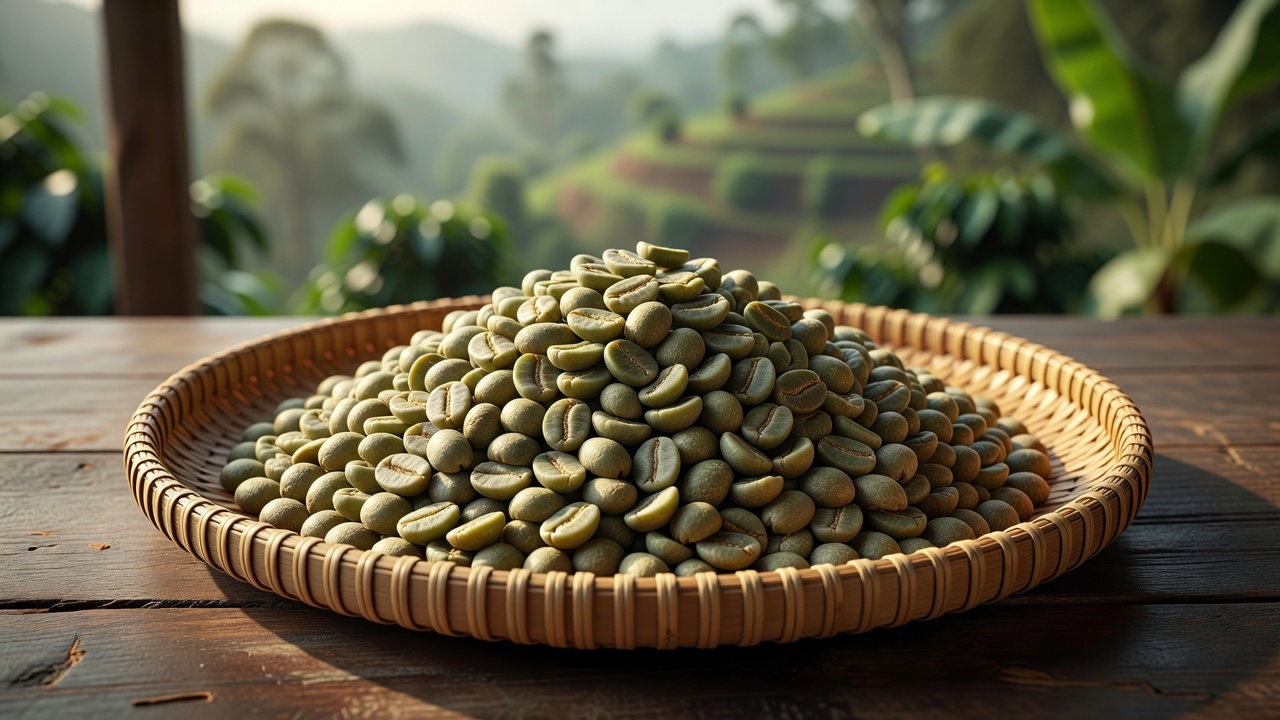
At TasikSpice, we ship green coffee beans — known in Indonesia as kopi biji hijau — from the highland farms of West Java and Sumatra to roasters and importers across the Middle East, South Asia, and Europe. The 2026 harvest has delivered excellent lots: Grade 1 Arabica from the volcanic slopes near Tasikmalaya and clean, bold Robusta coffee from Sumatra's lowlands, all milled to 11–13% moisture and quoted FOB Tanjung Priok, Jakarta. But getting unroasted coffee from our warehouse to your roastery requires one critical decision: ocean or air.
Sea Freight: The Backbone of Indonesian Green Coffee Export
For volume shipments, sea freight remains unbeatable on economics. A standard 20-foot container holds roughly 300–320 jute bags of 60 kg each — approximately 19 tonnes of Indonesian green coffee. Based on 2026 spot rates ex-Tanjung Priok, full-container ocean freight to major destinations typically adds only $0.08–$0.20 per kilogram to your cost:
- Jeddah / Dubai: 12–18 days transit; freight roughly $0.08–$0.15/kg
- Rotterdam / Hamburg: 30–38 days transit; freight roughly $0.10–$0.20/kg
- Ho Chi Minh City / Busan: 10–16 days transit; freight roughly $0.06–$0.12/kg
For buyers who do not need a full container, LCL (less-than-container-load) consolidation works well for 1–5 tonne orders, typically adding $0.30–$0.60/kg including destination handling. Green coffee is an ideal ocean cargo: with moisture held at 12–13% and packed in GrainPro-lined jute bags inside ventilated containers, it stays stable for weeks at sea. Standard export documentation — bill of lading, phytosanitary certificate, certificate of origin, fumigation certificate, and the ICO export document — moves alongside the cargo without adding meaningful delay.
Air Freight: When Urgent Buyers Justify the Premium
Air freight tells a very different story on cost. From Jakarta's Soekarno–Hatta airport, general cargo rates to the Middle East, Europe, and East Asia currently run $2.50–$5.50 per kilogram depending on destination and seasonal capacity — 25 to 60 times the sea freight cost per kilo. In exchange, your coffee lands in 3–7 days door-to-door, travels in pressurized, temperature-managed holds with minimal condensation risk, and clears customs faster thanks to the non-negotiable air waybill.
In our experience, air freight makes sense for four scenarios:
- Pre-shipment samples for cupping and quality approval — often 5–30 kg, where $100–200 in freight is trivial
- Specialty micro-lots where the coffee's FOB value is high enough that air adds under 30% to landed cost
- Stockout emergencies where a client's roasting schedule or production line cannot stop
- Bridge shipments that keep a client supplied while their ocean container is still at sea
Need a sample or bridge shipment evaluated and dispatched this week? Message TasikSpice on WhatsApp at +62 812-9869-9940 and we will confirm air freight availability and current rates within hours.
Cost Analysis: Which Mode Wins for Your 2026 Shipment?
Let us run the numbers on a realistic 2026 order: 2,000 kg of Grade 1 Arabica quoted at $5.00/kg FOB Tanjung Priok, destined for Rotterdam.
By sea (LCL): freight and destination charges of roughly $500–900 ($0.25–0.45/kg) and about 35 days door-to-door. Freight adds just 5–9% to the FOB value.
By air: freight of roughly $7,000–10,000 ($3.50–5.00/kg) and 5–7 days door-to-door. Freight adds 70–100% to the FOB value — effectively doubling your landed cost.
The break-even logic is straightforward. If the shipment is planned inventory for a standing contract, sea freight wins decisively — no volume buyer should pay an air premium for cargo that is shelf-stable for months. But if a stockout threatens a supply agreement worth $50,000 or more, an $8,000 air shipment is inexpensive insurance. This is why many of our European and Middle Eastern clients use a hybrid strategy: we air-freight 300–500 kg as a bridge, then the balance follows by sea. The client keeps roasting, and the freight bill stays proportional to real need.
September through November is peak booking season as freshly milled 2026 lots move to port. Our practical advice for buyers of Indonesian green coffee:
- Book ocean space 3–4 weeks ahead and consider fixed-rate agreements to guard against rate spikes
- Always air-freight your pre-shipment samples — a few hundred dollars protects a 19-tonne container decision
- Specify GrainPro liners regardless of transport mode, and confirm moisture below 12.5% on the export documents
- Clarify Incoterms early — whether you buy FOB Tanjung Priok or CFR, knowing who controls the freight decision keeps costs transparent
Whether you are building an Arabica coffee export program for European specialty roasters or sourcing container loads of Robusta coffee for the Middle East, TasikSpice will model both freight options for your exact volume and destination — using live 2026 rates, not estimates. Contact us on WhatsApp at +62 812-9869-9940 for a same-day quotation on green coffee beans, FOB Tanjung Priok.
Interested in sourcing premium Indonesian spices?
Contact TasikSpice on WhatsApp for FOB pricing, samples, and MOQ details.