Candlenut Food Safety: HACCP for Sun-Dried Spice Export
When international buyers source candlenut from Indonesia, they often focus on price and appearance—but the real difference between a reliable kemiri supplier and a costly quality failure lies in food safety. At TasikSpice, our candlenut (locally called kemiri spice or kemiri putih by farmers in the Tasikmalaya highland) undergoes rigorous HACCP-based controls from harvest to container loading. For the 2026 season, we offer premium candlenut bulk at $6.30/kg FOB Tanjung Priok, Jakarta, with a safety record that protects your brand.
Why HACCP Matters for Sun-Dried Candlenut in Tropical Climates
Sun-drying is the traditional and most economical way to reduce moisture in candlenut kernels after shelling. However, in West Java's highland climate—where TasikSpice sources its candlenut Indonesia from Tasikmalaya—relative humidity often exceeds 80% during the rainy season, and afternoon cloudbursts can interrupt drying cycles. Without strict hazard analysis and critical control points (HACCP), candlenut kernels are prone to mold growth, particularly Aspergillus flavus, which produces aflatoxin B1, a known carcinogen. For food manufacturers, a single rejected container due to aflatoxin contamination can wipe out an entire year's margin. That is why TasikSpice treats every stage of sun-drying as a critical control point, not just a traditional step. Moreover, candlenut's high oil content (60–65% by weight) makes it especially susceptible to rancidity and mold if moisture is not rapidly brought below 10%.
HACCP identifies biological, chemical, and physical hazards; establishes critical limits (e.g., moisture ≤ 9%, kernel integrity, absence of foreign matter); monitors these limits; and documents corrective actions. In tropical spice production, the biggest hazard is moisture-related microbiological growth. For candlenut bulk exports, maintaining a water activity below 0.65 is essential to prevent mold and bacterial proliferation during ocean freight.
TasikSpice's HACCP-Based Process: From Harvest to FOB Tanjung Priok
Our processing follows seven HACCP principles adapted to on-farm and facility operations. Here is how we control each critical point for candlenut bulk quality:
- Harvesting and receiving: Only mature candlenuts are collected from smallholder farmers in the Tasikmalaya highland. Nuts are inspected for insect damage, cracking, or premature harvest. We reject lots with visible mold before drying begins.
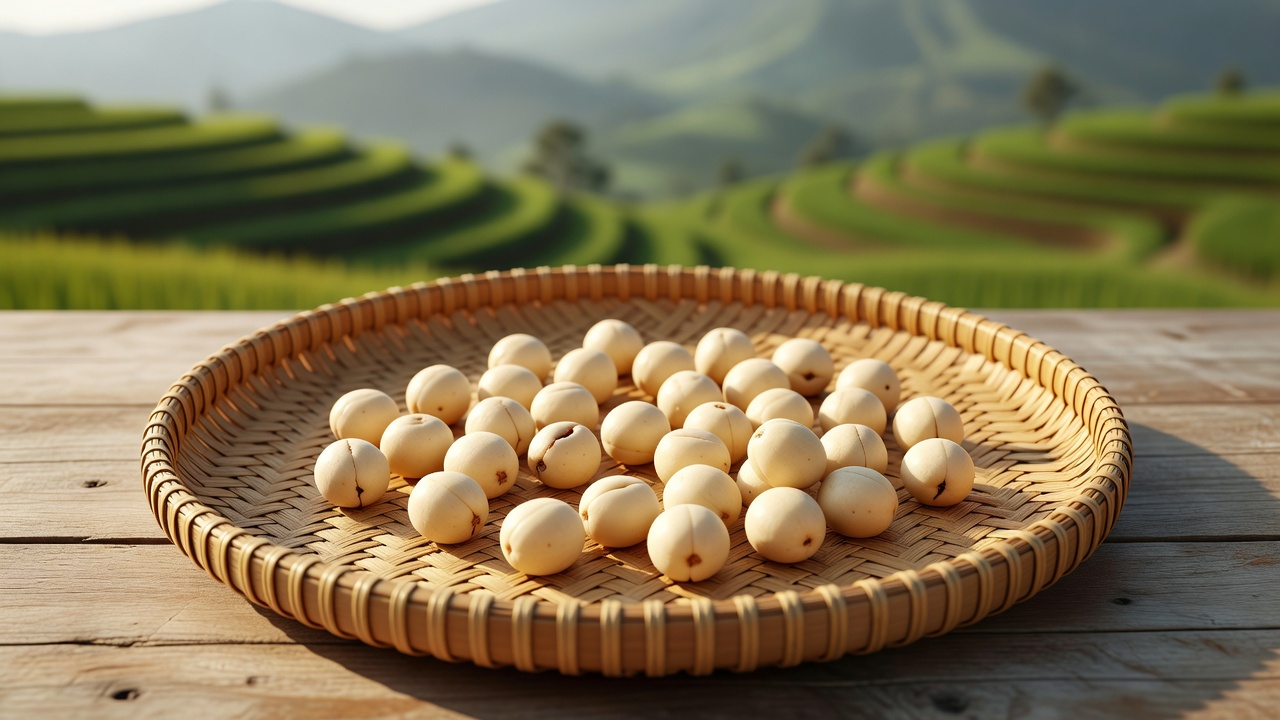
- Sun-drying on raised bamboo trays: Fresh candlenut kernels (after shelling) are spread in thin layers on sanitized, elevated drying racks to prevent ground contact and promote air circulation. Drying time is typically 5–7 days in full sun, but we extend to 10 days during humid periods. A digital moisture meter checks kernels daily; the target moisture content is ≤ 8% to ensure stability during ocean freight.
- Pest and foreign matter control: During drying, nets and clean covers protect kernels from birds, insects, and dust. After drying, a multiple-stage sorting line removes broken kernels, discolored nuts, and foreign matter like stones or shell fragments. Our export grade allows broken kernels below 3% and foreign matter below 0.5%.
- Packaging and storage: Dried candlenut is packed into food-grade, woven polypropylene bags (25 kg or 50 kg) with inner PE liner. Bags are stored on pallets in a ventilated warehouse with relative humidity controlled below 65%. We rotate stock using FIFO, and pre-shipment samples are tested for moisture, aflatoxin (max 10 ppb per EU regulation), and microbiology before container stuffing.
- Shipping and documentation: Each container is stuffed under supervision, sealed with a unique number, and accompanied by a full set of export documents: phytosanitary certificate, certificate of origin, fumigation certificate if required, and a HACCP-based food safety declaration. FOB Tanjung Priok means risk transfers after loading, but we ensure the product leaves our facility safe.
The result is a candlenut bulk supply that consistently meets EU, Middle East, and South Asian residual limits. Our QC team audits every batch against a written HACCP plan, and we maintain traceability from farm to container.
2026 Season Pricing, Grading, and How to Order
For the 2026 harvest season (July–September peak), TasikSpice offers two export grades of sun-dried candlenut from the Tasikmalaya highland:
- Grade A (Premium): Whole kernels, uniform light cream color, moisture ≤ 8%, broken ≤ 3%, foreign matter ≤ 0.3%, aflatoxin < 5 ppb. Price: $6.30/kg FOB Tanjung Priok.
- Grade B (Standard): Whole to slightly broken kernels, minor color variation, moisture ≤ 9%, broken ≤ 8%, foreign matter ≤ 0.5%, aflatoxin < 10 ppb. Price: $5.80/kg FOB (minimum 5 MT).
Our minimum order quantity is 1 metric ton for samples, 5 metric tons for container loads (a 20-foot container holds approximately 16 MT of candlenut). Lead time from order confirmation to shipment is 14–21 days depending on milling and drying capacity. We can ship worldwide, with strongest demand from the Middle East, South Asia, and Europe.
Ready to secure your candlenut Indonesia supply for 2026? Contact TasikSpice via WhatsApp at +62 812-9869-9940 to request a sample, view our HACCP audit report, or discuss contract pricing for bulk orders. We are committed to making your spice sourcing as safe as it is profitable.
Interested in sourcing premium Indonesian spices?
Contact TasikSpice on WhatsApp for FOB pricing, samples, and MOQ details.