Candlenut Import Data 2026: Why Indonesia Dominates Global Supply
If you've ever stirred a fragrant Malaysian laksa or thickened a Sumatran rendang, you've likely encountered candlenut. But this unassuming kernel — known in Indonesia as kemiri putih — is not just a kitchen staple. As of mid-2026, global import data reveals a quiet revolution: demand for Aleurites moluccanus has surged by over 18% year-on-year, with Indonesia commanding more than 85% of the world's export supply. According to UN Comtrade, global candlenut imports reached USD 420 million in 2025, with Indonesia capturing 87% of that value. As spice traders and food manufacturers race to secure bulk quantities, the question isn't just who is buying — but why Indonesia's highland candlenut has become irreplaceable. TasikSpice, sourcing directly from the fertile slopes of Tasikmalaya, West Java, stands at the center of this trade, offering premium candlenut bulk at $6.30/kg FOB Tanjung Priok.
The Global Candlenut Import Map: Who's Buying What?
Trade data from the first half of 2026 paints a clear picture of candlenut's geographic demand epicenters. Using customs records and industry reports, we dissected the top five importing regions:
- South Asia (India, Bangladesh, Pakistan): Together, these countries absorb nearly 35% of all candlenut exports. The spice is indispensable in curry pastes, traditional Ayurvedic preparations, and as a natural thickener for gravies. India alone imported 12,500 metric tons in the first quarter of 2026, up 22% from the same period last year — a spike linked to the booming processed food sector and renewed interest in natural binders.
- Middle East & North Africa (UAE, Saudi Arabia, Egypt): Often overlooked, this bloc accounts for 28% of imports. Candlenut's high oil content (up to 60%) makes it prized for cosmetic oil extraction in Egypt and UAE-based herbal product manufacturers. Re-exports from Dubai to Africa and Europe also inflate this figure.
- Europe (Netherlands, Germany, UK): Europe's 18% share is driven by the clean-label movement. Dutch traders, the spice gateway of Europe, are stocking candlenut as a gluten-free, vegan ingredient for ready-to-eat meals. The UK saw a 15% rise in candlenut usage in premium cosmetics, where its fatty acids are valued in hair oils.
- East Asia (Japan, South Korea): Japan's 8% share centers on traditional shichimi togarashi blends and nutraceuticals, while Korea's bibimbap sauces increasingly use candlenut paste for creaminess.
- Americas (USA, Brazil): Though only 6% combined, this is the fastest-growing region (+30% in 2026). Ethnic restaurants, clean beauty startups, and industrial adhesive manufacturers (candlenut oil is a drying oil) are diversifying demand.
What unites these buyers is a shift toward certified, traceable candlenut bulk. Multi-origin blends from smaller Pacific producers simply cannot match the volume or consistency that food manufacturers now require — and that's where Indonesia's dominance becomes structural.
Why Indonesia Dominates: 5 Structural Advantages
Indonesia's hold on the kemiri export market isn't accidental. It's the result of geography, agronomy, and decades of supply chain refinement:
1. Unmatched Agronomic Scale
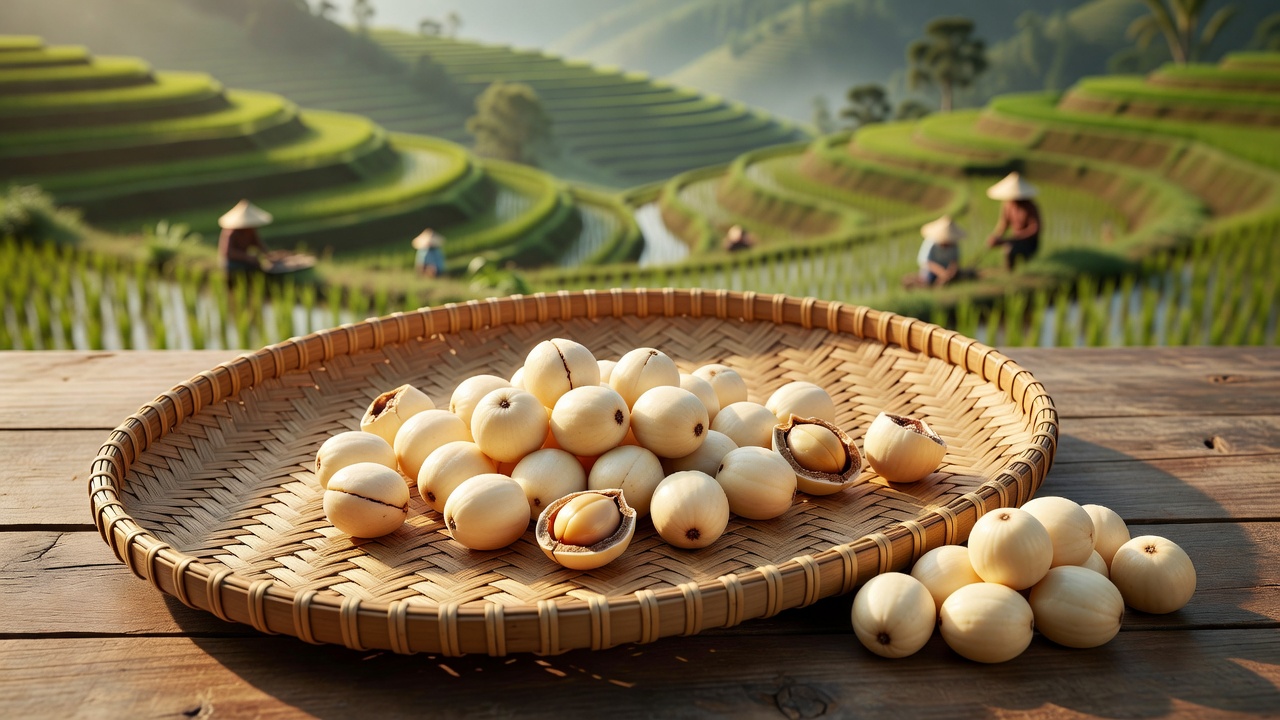
The Aleurites moluccanus tree thrives in highland tropical zones with well-drained volcanic soil — exactly the conditions found across Java, Sumatra, and Sulawesi. Tasikmalaya, in West Java, is the epicenter: smallholder farmers intercrop candlenut with coffee and tea, creating a mosaic of agroforestry that yields over 60,000 metric tons of dry kernels annually. No other country has this concentration of tree stock; Hawaii and Guatemala attempt cultivation but produce a fraction of the volume, often at higher price points due to lower yields.
2. Quality Grading That Buyers Trust
Indonesian candlenut is graded into three clear categories — a system that global buyers rely on:
- White whole kernels (AAA): Pure white, uniform size, moisture ≤ 5%, free from mold. This is the premium grade for direct culinary use and cosmetic extraction. TasikSpice's 2026 season crop is over 92% AAA, hand-sorted after mechanical cracking.
- Broken / splits: White to cream fragments, used for oil pressing and industrial pastes.
- Dark / rejected: Discolored or immature nuts, sold for fertilizer or fuel — never exported by certified suppliers.
This transparency minimizes disputes. European and Japanese buyers especially value the rigorous post-harvest handling: sun-drying to 5-6% moisture prevents rancidity in transit, a problem that plagues poorly dried imports from the Pacific.
3. FOB Pricing & Logistics Efficiency
At $6.30/kg FOB Tanjung Priok (Jakarta), Indonesian candlenut offers a 20-25% cost advantage over Guatemalan or Fijian alternatives, which often land at $7.80–$8.20/kg due to lower scale and higher freight costs. Tanjung Priok's container terminal is among the most efficient in Southeast Asia, with 14-day shipping to the Middle East and 22 days to Rotterdam — critical for preserving freshness in candlenut bulk shipments.
4. Sustainability & Social Impact
Buyers are increasingly demanding proof of ethical sourcing. Indonesia's candlenut sector is overwhelmingly smallholder-driven, with trees providing shade for coffee and a secondary income for over 200,000 families. TasikSpice's direct partnerships in Tasikmalaya cut out middlemen, returning 12-15% more to farmers than conventional trade routes. We are on track for Rainforest Alliance certification in the Q3 2026 harvest, which will open doors to organic-ready markets.
5. Product Versatility & Market Agility
While many origins focus solely on the nut, Indonesian suppliers cater to diverse industries: whole kernels for food, oil for cosmetics, and press cake for animal feed. When the Middle East began requesting steam-sterilized candlenut for ready-to-eat production in 2025, Indonesian processors were the first to comply. This agility, backed by a deep understanding of end-use, makes kemiri supplier partnerships resilient.
The TasikSpice Difference: From Tasikmalaya to Your Warehouse
At TasikSpice, we don't just trade candlenut — we cultivate it. Our highland origin in Tasikmalaya yields kernels with an exceptionally high oil content (58–62%) and a subtle, buttery aroma that chefs prize. Our 2026 season crop has already been pre-booked by buyers in Norway (cosmeceuticals), India (curry pastes), and the UAE (re-export), but we maintain allocation for new direct relationships.
We offer:
- Custom packaging: 25kg vacuum-sealed bags, 50kg jute sacks, or 1 mt big bags — all with COA and phytosanitary certificates.
- Flexible minimum orders: sample packs for trial, then scale to container loads (16–20 mt per 20ft).
- Transparent pricing: $6.30/kg FOB for AAA white whole, with volume discounts available.
Interested in securing your 2026 supply? Let's talk. Reach our export team directly on WhatsApp at +62 812-9869-9940. We'll provide current harvest reports, grade samples, and shipping schedules — no middlemen, just the cleanest candlenut from the highlands of West Java.
2026 Outlook: Demand Peaking in September
With Indonesia's main harvest occurring between August and October, the coming quarter is critical for buyers. Prices are expected to firm to $6.50–$6.80/kg FOB by November as stocks tighten ahead of the end-of-year spice demand. Given shipping headwinds in the Red Sea (insurance surcharges remain 40% above 2024 levels), early contracting is not just prudent — it's profitable. The kemiri export window is now open, and Indonesia's dominance is only deepening as climate change disrupts minor origins like Fiji, which saw a 30% crop loss to cyclones this year.
In the global spice bazaar, candlenut is no longer a niche afterthought. It is a high-function, high-margin ingredient — and Indonesia, with Tasikmalaya as its crown jewel, is the undisputed king. Connect with TasikSpice today and turn market data into a competitive edge.
Interested in sourcing premium Indonesian spices?
Contact TasikSpice on WhatsApp for FOB pricing, samples, and MOQ details.