Candlenut Export: Sustainable Packaging for Premium Spice
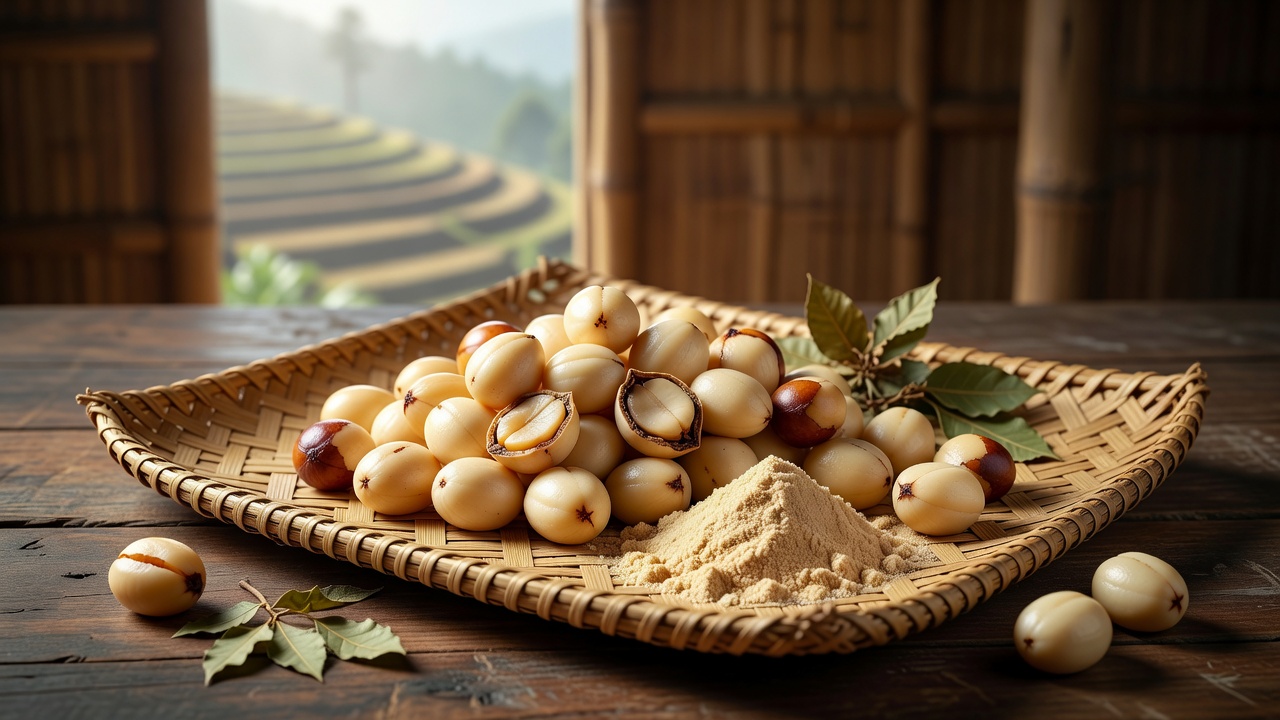
A sustainable spice package must do more than look environmentally responsible: it must deliver its contents in excellent condition. For premium Candlenut from Indonesia, that means protecting delicate kernels against moisture, oxygen, breakage, and unwanted odors throughout international transport. Known locally as kemiri putih, this ingredient also appears in buyer searches such as ‘kemiri spice,’ ‘kemiri export,’ and ‘kemiri supplier.’ For the 2026 season, TasikSpice’s packaging discussion begins with a practical question: which materials can reduce environmental impact while preserving the quality importers actually pay for?
October 05, 2026 — Product focus: Candlenut (Aleurites moluccanus), originating from the Tasikmalaya highland, West Java.
Why Premium Candlenut Needs Protective Export Packaging
Candlenut is valued by food manufacturers and spice traders for the richness and body it brings to cooked spice pastes, sauces, and traditional dishes. Its oil-rich composition also creates a packaging challenge. Oxygen exposure can encourage rancidity, while moisture ingress can compromise storage stability. A package that breaks down readily under certain conditions may still perform poorly during humid warehouse handling or a long sea journey.
Protection starts before packing. Harvested nuts should be collected promptly, separated from damaged material, and dried under controlled, hygienic conditions. After shelling, processors should inspect kernels for mold, insect damage, foreign matter, discoloration, and rancid odors. Packaging cannot reverse poor drying or restore kernels that have already deteriorated. Candlenut is intended for appropriate cooking or processing, rather than consumption as a raw snack.
Buyers should agree on specifications before selecting materials. Commercial grades may distinguish whole kernels from split or broken pieces, but grade names are not necessarily standardized between suppliers. A useful purchase specification defines permitted defects, kernel appearance, foreign matter, moisture requirements, and any microbiological or residue testing needed for the destination market. Whole kernels often need additional cushioning because cosmetic damage can reduce their commercial value.
For premium shipments, packaging development should therefore connect material choices to measurable results. Check seal integrity, resistance to punctures, moisture protection, and oxygen transmission under relevant temperature and humidity conditions. Water-vapor transmission rate and oxygen transmission rate are useful indicators, but laboratory figures alone do not establish shelf life. Filled-package storage trials and transport testing provide stronger evidence for a specific product and route.
Biodegradable Candlenut Packaging: Choosing Credible Materials
A practical starting point is to evaluate the packaging in layers. The inner food-contact liner protects the kernels; the outer sack or carton provides handling strength; pallets and transport materials support distribution. Improving one layer does not require making every component from the same material. Reducing unnecessary material and using a recyclable outer carton can be worthwhile even when a more protective inner liner remains necessary.
Paper-based outer packaging is an option where adequate compression strength and humidity resistance can be maintained. Responsibly sourced fiber may support procurement goals, while clear material identification helps buyers manage disposal. However, paper is not automatically an effective moisture or oxygen barrier. Coatings, adhesives, inks, and laminations can also affect recyclability or compostability, so environmental claims should describe the complete packaging component accurately.
For inner liners, suppliers may propose regenerated cellulose films, compostable polymer blends, or coated paper structures. These are candidates for testing, not interchangeable replacements for conventional barrier films. Performance varies with thickness, coating, seal design, and ambient humidity. A biodegradable liner should only be adopted after its food-contact suitability and protective performance have been demonstrated for the intended shipment.
- Separate the terminology: bio-based describes feedstock origin; biodegradable describes breakdown under specified conditions. Neither term alone proves suitability for a particular disposal system.
- Verify compostability claims: EN 13432 addresses compostable packaging, while ASTM D6400 addresses plastics intended for aerobic municipal or industrial composting. Check the certification scope and applicable destination requirements.
- Check local infrastructure: industrial compostability does not mean home compostability or guaranteed collection. Ask whether the importer’s waste contractor actually accepts the material.
- Validate food contact: obtain documentation relevant to the destination market and intended contact with an oil-rich food. Compostability certification does not establish food-contact compliance.
- Assess the full package: labels, closures, printing, and adhesives need consideration alongside the main film or paper substrate.
Environmental improvements should also account for product loss. If a thinner or compostable package leads to damaged kernels, rejected deliveries, or shorter usable storage time, the overall result may be worse. Compare packaging mass, shipment efficiency, realistic recovery routes, and spoilage risk. Avoid broad claims such as ‘zero waste’ or ‘plastic free’ unless the complete construction and supporting evidence justify them.
Planning Sustainable Candlenut Export Orders in 2026
TasikSpice’s supplied product price is US$6.30/kg FOB Tanjung Priok, Jakarta, for Candlenut originating from the Tasikmalaya highland, West Java. Treat this as a quotation reference and confirm validity, grade, order volume, and packaging specification before contracting. Custom biodegradable liners, independent testing, or specialized printing may change the final offer; their inclusion should never be assumed.
Under FOB terms, the seller delivers the goods on board the nominated vessel at the named port, where risk transfers to the buyer. The buyer generally arranges the main ocean carriage and any desired cargo insurance. For containerized shipments handed to a terminal before loading, discuss whether FCA better matches the actual handover. Clear terms help both parties assign responsibility for handling and transport arrangements.
A packaging pilot is a sensible first step. Agree on a sample configuration, fill it with representative kernels, and assess sealing, stacking, vibration damage, and storage stability. Record lot identification, packing date, net weight, and handling instructions. Before dispatch, inspect the container for cleanliness, dryness, leaks, and strong odors. Any desiccant system should be correctly sized and safely separated from direct food contact.
Documentation should match the product, packaging, and destination. Buyers commonly require a commercial invoice, packing list, and transport document, with origin, phytosanitary, or other certificates where applicable. Confirm requirements with the importer and relevant authorities. If solid-wood pallets are used, check applicable ISPM 15 treatment and marking requirements. Keep material declarations and any compostability evidence available alongside the shipment records.
For the 2026 season, sustainable packaging offers a useful opportunity to combine Indonesian origin with transparent, technically sound procurement. TasikSpice buyers can begin by defining their required kernel grade, destination, shelf-life target, and disposal infrastructure. Contact TasikSpice on WhatsApp to request a current quotation and discuss packaging options, samples, and validation requirements for your next Candlenut shipment.
Interested in sourcing premium Indonesian spices?
Contact TasikSpice on WhatsApp for FOB pricing, samples, and MOQ details.