Cocoa Beans: A Buyer’s Color, Aroma & Integrity Guide
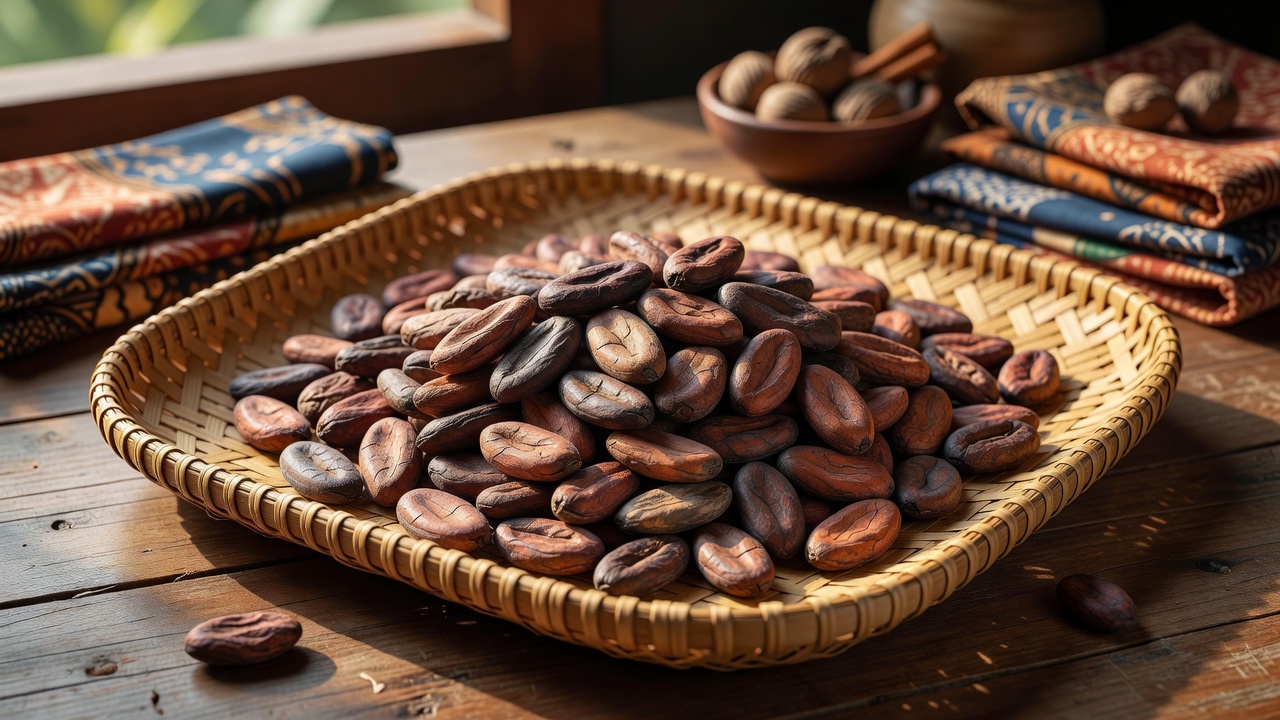
A sack of cocoa beans can look clean and uniform yet hide the defects that matter most: mold inside the cotyledons, smoky odors, or brittle kernels damaged during handling. For international buyers, an attractive photograph is only the beginning. Cocoa beans, known in Indonesia as biji kakao, deserve an inspection that connects external appearance with internal condition and aroma before a shipment is approved.
Derived from Theobroma cacao, Indonesian cocoa offers buyers access to established producing regions including Sulawesi and Sumatra. For September 29, 2026 procurement planning, TasikSpice recommends evaluating each available lot against a written specification. The 2026 season label alone cannot establish fermentation quality, freshness, or suitability for a particular manufacturing process.
Color: Read the Shell, Then Inspect the Cocoa Kernel
Start with the outside, but resist grading by shade alone. Dried cocoa shells may show reddish, brown, or darker tones influenced by genetics, fermentation, drying, and storage. A reasonably consistent appearance can support a first impression of orderly processing, but neither dark shells nor a polished presentation prove that the beans are well fermented.
Spread a representative sample on a clean, neutral-colored surface under consistent lighting. Look for visible fungal growth, adhering debris, insect damage, flat beans, broken shells, and mixed material. Dust and surface discoloration warrant closer examination; photographs cannot reliably distinguish harmless marks from mold. Record observations as measurable defects instead of relying on descriptions such as ‘premium brown.’
Next, request a cut test. Beans should be opened lengthwise so the internal cotyledons can be examined. Brown interiors generally support evidence of fermentation, while purple coloration can indicate incomplete fermentation. Slaty interiors are typically dense and grayish and are associated with insufficient fermentation. Interpretation still requires care because genetics and processing affect color development.
For Sulawesi cocoa, ask explicitly whether the offered lot is fermented or unfermented. Origin is not a fermentation grade, and Indonesian supply includes different processing profiles. A buyer seeking fermented beans for chocolate production should specify that requirement directly rather than infer it from geography or shell appearance.
- External color: Record the range and any unusual patches, deposits, or visible mold.
- Internal color: Report brown, partly purple, purple, and slaty classifications according to the agreed method.
- Internal defects: Separately identify mold, insect damage, and other categories required by the contract.
- Evidence: Request dated photographs of both intact and cut beans from the sampled lot.
Use a recognized framework, such as ISO 2451 for cocoa bean specifications and quality requirements, where appropriate to the transaction. The purchase contract should identify the applicable edition, sampling procedure, classifications, and acceptance limits. A percentage means little unless both parties agree on how the sample was collected and scored.
Aroma and Kernel Integrity: Check Beyond Appearance
Aroma is the second part of this visual grading checklist because appearance cannot reveal every handling problem. Assess beans in a clean, odor-free setting, first whole and then freshly cut or broken. Unroasted cocoa may carry cocoa-like, fruity, earthy, or acidic notes depending on fermentation and drying. It should not be judged against the developed aroma of roasted chocolate.
Pay particular attention to musty, smoky, chemical, petroleum-like, or other foreign odors. Smoke can be introduced during drying, while unsuitable warehouses, packaging, or containers can expose beans to outside odors. A pronounced vinegar-like note warrants discussion of fermentation and drying, although acidity alone does not establish that a lot is defective.
Do not assume that roasting will correct a questionable shipment. Where odor is disputed, hold acceptance pending an agreed assessment. For chocolate applications, a standardized sample roast and liquor evaluation can help determine whether the flavor profile meets the intended use. Record the preparation conditions so supplier and buyer results remain comparable.
Kernel integrity is the third checkpoint. Examine whether beans are reasonably filled, whether cotyledons remain protected by the shell, and whether handling has created excessive fragments. Fermented beans naturally develop internal fissures; these should not be confused with crushing damage. Flat or poorly filled beans, insect galleries, and substantial breakage deserve separate reporting.
Integrity has commercial consequences. Excess shell, flat beans, and fragments can reduce usable nib yield or complicate cleaning and processing. Ask for bean count per 100 grams as a size indicator and, when yield matters, an agreed shell-content assessment. Larger beans are not automatically better flavored, so size should complement fermentation and defect results.
Moisture also belongs beside the sensory checks. Buyers commonly discuss dried cocoa in the vicinity of 6.5–7.5% moisture, but the contractual maximum and test method must be explicit. Excess moisture increases storage risk, while excessive drying can encourage breakage. A dry-looking shell is no substitute for a measured result.
Turn the Checklist into an Indonesian Cocoa Export Specification
For an Indonesian cocoa export purchase, connect every inspection result to an identifiable lot. Request origin, crop or collection period, fermentation status, drying method, warehouse history, and sampling date. Cocoa is harvested across different periods and locations, so a 2026 shipment may contain beans collected at different times. Ask whether lots have been blended.
A practical approval sheet should capture the following:
- Lot identity: Supplier reference, Sulawesi or Sumatra origin, quantity, and bag markings.
- Sampling: Representative increments across the lot, an agreed composite sample, and sealed retention samples.
- Quality limits: Moisture, bean count, fermentation indicators, moldy and insect-damaged beans, broken material, and foreign matter.
- Sensory acceptance: Agreed treatment of smoke, mustiness, and foreign odors.
- Shipment controls: Suitable food-contact packaging, a clean and dry container, and measures to manage condensation.
Visual and sensory grading cannot establish food safety compliance. Buyers should separately agree on risk-based testing, including cadmium and pesticide residues where relevant to the destination and intended product. Export documentation should likewise reflect the importing country’s requirements, including phytosanitary documentation where required.
For buyers comparing bulk cocoa Indonesia offers, compare quotations against the same quality limits, shipment window, packaging, and inspection terms. TasikSpice pricing is available on request, quoted FOB Tanjung Priok, Jakarta. Under FOB terms, the seller delivers the goods on board the buyer-nominated vessel; main ocean freight and insurance arrangements should be addressed separately.
Contact TasikSpice on WhatsApp to discuss Sulawesi or Sumatra cocoa availability, request lot-specific quality information, and obtain a 2026-season quotation. Share your fermentation requirement, moisture limit, destination, and expected volume so the offer can be evaluated against your actual buying specification.
Interested in sourcing premium Indonesian spices?
Contact TasikSpice on WhatsApp for FOB pricing, samples, and MOQ details.