Corn Export Documentation Guide: Phytosanitary, COO & Bill of Lading
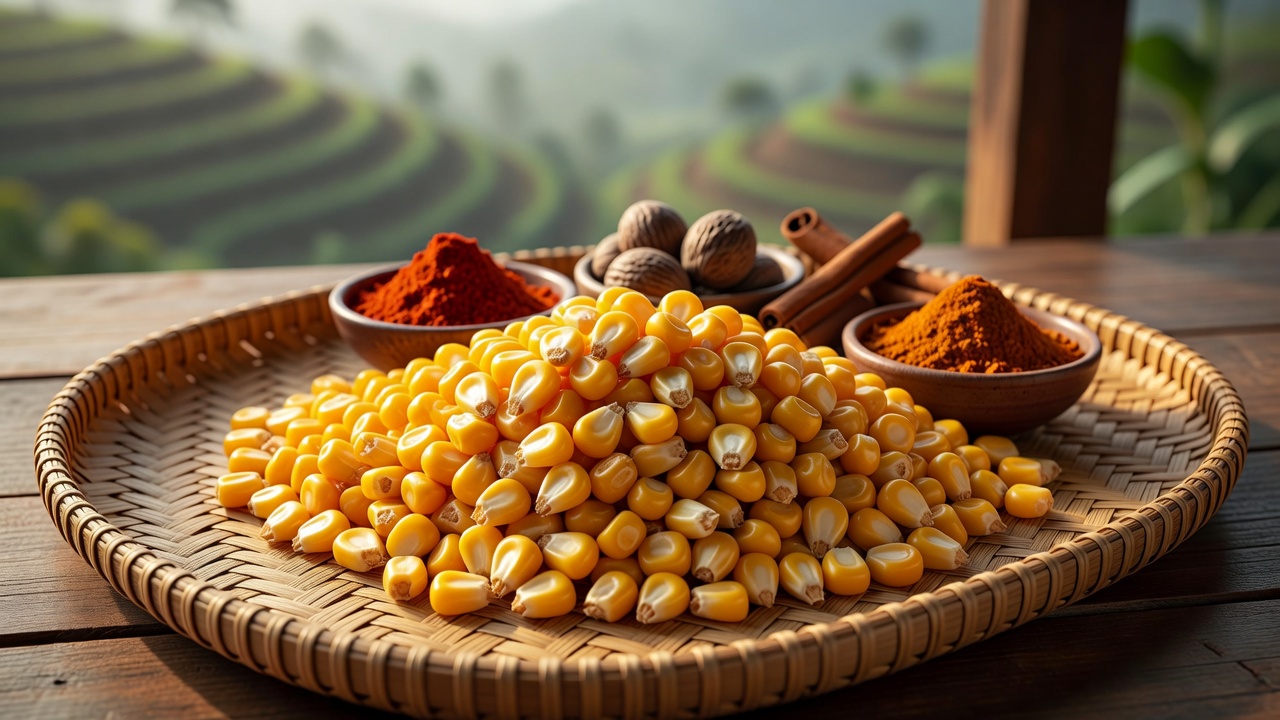
Indonesia has quietly become one of Southeast Asia's most reliable sources of premium dried corn kernels, serving everything from animal feed manufacturers in the Middle East to snack producers in South Asia. For international buyers eyeing the 2026 harvest, understanding export documentation is just as critical as evaluating grain quality. At TasikSpice, we know that a flawless shipment doesn't start at the port — it starts with paperwork. This guide walks you through the three indispensable documents for exporting corn (maize) from Indonesia, locally known as jagung pipil: the phytosanitary certificate, certificate of origin, and Bill of Lading. Whether you're purchasing a single container of bulk corn Indonesia or booking regular FOB Tanjung Priok shipments, mastering these steps will keep your supply chain moving without costly delays.
Why Documentation Defines Your Corn Buying Experience
Imagine a container of high-grade feed corn Indonesia sitting at customs because one certificate is missing or incorrectly worded. Demurrage fees pile up, your production schedule stalls, and trust erodes. Corn grain suppliers who prioritize documentation transparency protect both their margins and their buyer relationships. Indonesia's Ministry of Agriculture and Ministry of Trade have clear protocols for all agricultural exports, and corn maize is no exception. As a dedicated supplier with roots in West Java's Tasikmalaya highland and sourcing networks across Java and Lampung, TasikSpice handles the bureaucratic legwork so you don't have to. Here is the trio of documents every buyer must understand.
Phytosanitary Certificate: The Plant Health Passport
A phytosanitary certificate is your guarantee that the dried corn kernels are free from quarantine pests and diseases. Issued by Indonesia's Agricultural Quarantine Agency (Barantin), this document is mandatory for nearly all destination countries. Without it, your consignment of bulk corn Indonesia risks rejection at the port of discharge.
How TasikSpice Obtains the Certificate
The process begins well before loading. After your order is confirmed, our quality control team draws representative samples from the dried corn kernels lot. These samples are sent to a government-approved laboratory for analysis, checking for weevils, fungal spores, and harmful bacteria such as aflatoxins. If the corn passes, an inspector visits our storage facility to verify that the product is properly dried, sorted, and stored — typically achieving a moisture content below 14% to prevent mold. Only then does Barantin issue the phytosanitary certificate, which includes:
- Botanical name: Zea mays
- Quantity and packaging: E.g., 26 metric tons in 50-kg PP bags
- Treatment: Any fumigation details, if applicable
- Country of origin: Indonesia
- Port of exit: Tanjung Priok, Jakarta
For organic or specialty corn maize, we can also arrange additional certifications like non-GMO statements if required. The phytosanitary certificate is typically issued within 48 hours of the inspection and is valid only for the specific shipment, so timing is key. As a proactive corn grain supplier, TasikSpice aligns this step with your vessel's departure date to ensure freshness.
Certificate of Origin (COO): Proving Indonesian Roots
The Certificate of Origin is the document that officially declares your corn is 100% grown and processed in Indonesia. For many buyers, this is non-negotiable — import duties, quotas, and even political relationships hinge on the COO. In trade agreements like ASEAN-China or Indonesia-Pakistan, a valid COO can slash tariffs on feed corn Indonesia imports, giving you a significant cost advantage.
Issuing Authority and Application
In Indonesia, COOs are typically issued by the Indonesian Chamber of Commerce and Industry (KADIN) or by an authorized trade office. TasikSpice submits a detailed application supported by:
- A copy of the commercial invoice
- Packing list
- Farm or processor registration documents from Java or Lampung
- Proof of local procurement (e.g., receipts from farming cooperatives)
KADIN verifies that the corn maize meets the origin criteria, which for our dried corn kernels means they are wholly obtained in Indonesia. The COO is then stamped and signed, often in the morning following submission. We can provide either a generic (non-preferential) COO or a preferential one under specific trade schemes — just let us know your destination country's requirements.
For importers concerned about traceability, the COO offers an audit trail back to the fertile volcanic soils of Java and Lampung, where corn is traditionally rain-fed and sun-dried, yielding robust, golden grains prized for milling and feed. When you partner with a transparent corn grain supplier, this document becomes a badge of authenticity.
Bill of Lading: The Shipment's DNA
The Bill of Lading (B/L) is the contract between you, the freight carrier, and the shipper. It serves as a receipt for the goods, evidence of the contract of carriage, and a document of title. In practical terms, whoever holds the original B/L owns the bulk corn Indonesia until it's released at the destination. Clean B/Ls confirm that the dried corn kernels were loaded without visible damage or contamination; a claused B/L would note defects and is best avoided.
Key Details on a Corn B/L
When you order FOB Tanjung Priok, Jakarta, TasikSpice coordinates with the shipping line to produce a B/L that reflects the exact agreement. You will see:
- Shipper: Our export company name
- Consignee: Your name and address, or "To Order" if using a letter of credit
- Vessel/Voyage: The ship that will transport your corn maize
- Port of Loading: Tanjung Priok, Indonesia
- Port of Discharge: As per your contract (e.g., Jebel Ali, Karachi, Rotterdam)
- Description of Goods: "26 Metric Tons Dried Corn Kernels, Packed in 520 Bags"
- Container/Seal Number: For tracking during transit
We typically use break-bulk or containerized shipments, depending on volume. For feed corn Indonesia destined for large Middle Eastern feed mills, 20-foot or 40-foot containers loaded with 50-kg bags are standard. The B/L serves as your proof that the cargo was received by the carrier in good order, and it is often a required document for payment under a Letter of Credit (L/C).
TasikSpice ensures that the B/L is issued promptly after sailing, so you can present it to your bank or importer without delay. We also send a scanned copy as soon as the vessel departs, allowing you to start customs pre-clearance in your country. A swift, accurate Bill of Lading is the hallmark of a reliable corn grain supplier, and we treat it with the same care as the product itself.
Beyond the Big Three: What Else to Expect
While the phytosanitary certificate, COO, and B/L form the backbone of any export, a complete documentation package for dried corn kernels often includes:
- Commercial Invoice: Stating the agreed FOB price, quality grade, and payment terms
- Packing List: Detailing bag count, net weight, and gross weight
- Fumigation Certificate: If required by the destination, showing the corn maize was treated for pests before shipment
- Certificate of Analysis: Laboratory results for moisture, protein, and aflatoxin levels
For buyers navigating the 2026 season, we recommend requesting all documents at least one week before the sailing date. This buffer allows for corrections or clarifications. At TasikSpice, we compile a digital dossier for each order, and our support team is available 24/7 to answer documentation questions. After all, a shipment of feed corn Indonesia is more than just grains — it's a promise of consistency and compliance.
Why Choose TasikSpice for Your Corn Maize Needs
Sourcing bulk corn Indonesia from a new market can feel daunting, but with the right partner, it becomes a smooth, profitable venture. Our deep roots in West Java, coupled with long-term relationships in Lampung's corn belt, give us access to dried corn kernels that meet rigorous international standards. We handle every layer of export logistics, from pre-loading inspections to the final Bill of Lading, so you can focus on growing your business. The 2026 harvest is shaping up to be abundant, and we are ready to ship FOB Tanjung Priok at competitive rates.
If you are exploring corn grain supplier options or have questions about the documentation for your specific market, our team is just a message away. Reach out via WhatsApp at +62 812-9869-9940 to discuss your requirements, request a sample, or get a quote for your next container. Let's ensure your corn maize journey from Indonesia to the world is as seamless as it is rewarding.
Interested in sourcing premium Indonesian spices?
Contact TasikSpice on WhatsApp for FOB pricing, samples, and MOQ details.