Green Coffee Beans Container Loading Guide: FCL from Jakarta
Few things damage a container of Indonesian green coffee faster than improper floor loading. A single condensation point inside a 40ft container can turn premium Arabica coffee export into a moldy claim. At TasikSpice, we’ve refined our container loading protocol over multiple 2026 season shipments from Tanjung Priok, Jakarta, to ensure every bag of green coffee beans arrives clean, dry, and ready for roasting.
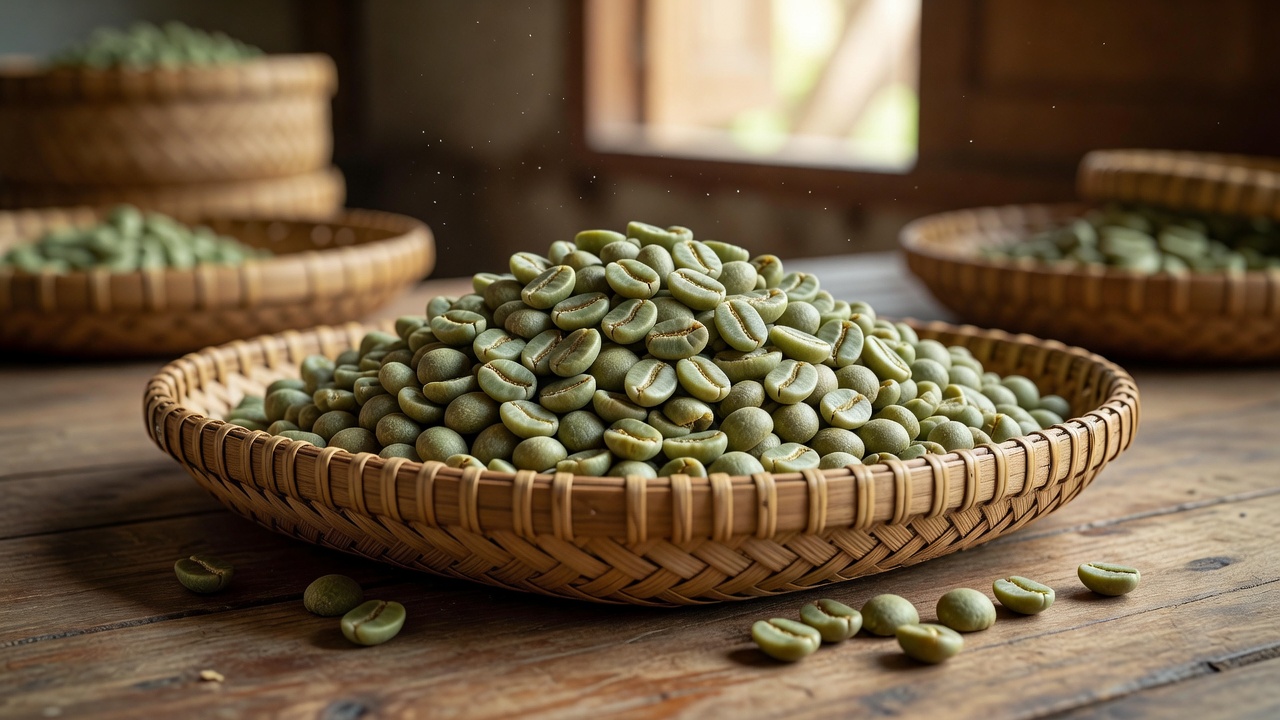
Green coffee beans—known locally as kopi biji hijau—are the raw, unroasted seeds of Coffea arabica and Coffea robusta. Indonesia’s volcanic highlands of Java and Sumatra produce both varieties, with Java typically offering bright, clean Arabica profiles and Sumatra delivering full-bodied Robusta coffee with earthy depth. For international buyers, the difference between a profitable import and a costly rejection often comes down to how bulk green coffee is packed inside the shipping container.
Why Container Loading Quality Defines Your Green Coffee Beans
Green coffee beans are hygroscopic. They absorb and release moisture depending on ambient humidity, and during a 25–35 day ocean voyage from Jakarta to Europe or the Middle East, the temperature inside a sealed container can swing by 15°C or more. Without proper ventilation, desiccants, and bag selection, moisture migrates from warm air to cool surfaces, condensing on container walls and dripping onto jute bags. The result is musty, moldy, or even fermented Robusta coffee that fails cupping at destination.
TasikSpice treats every 20ft and 40ft FCL as a controlled environment. We inspect containers before loading, reject any with holes, rust, or lingering odors, and document the process with photos for our buyers. This is especially important for the 2026 season, when early harvest volumes from Java’s Sunda highlands are expected to move quickly from Tasikmalaya to Tanjung Priok for consolidation.
Step-by-Step Bulk Packing for 20ft and 40ft FCL Shipments
For green coffee beans in bulk, we use 60 kg jute bags with food-grade GrainPro liners as standard. The jute provides mechanical strength and breathability, while the GrainPro liner creates a hermetic barrier against moisture, pests, and oxygen. For buyers requiring vacuum-packing or polypropylene outer bags, we offer those options too. The key is matching bag type to the bean’s moisture content—Certified Indonesian green coffee for export should be dried to 12–13% moisture, stabilized for at least 30 days before bagging.
- Bag selection: 60 kg jute + GrainPro liner (recommended for long voyages); 50 kg polypropylene for cost-sensitive Robusta coffee; 69 kg vacuum packs for specialty Arabica coffee export orders.
- Palletized loading: For 20ft containers, we can load 10–11 pallets, each holding 30–32 bags, totaling 18–20 metric tons. For 40ft FCL, 20–22 pallets yield 25–27 metric tons without exceeding axle weight limits.
- Floor-loaded loading: Some buyers prefer floor stacking to maximize volume. In a 20ft container, we interlock jute bags in a brick pattern to 8–9 layers high, reaching 19–21 tons. In a 40ft container, 10–11 layers yield 26–28 tons. We never stack above 3.5 meters to avoid crushing lower bags and causing bean breakage.
- Desiccant placement: We hang 6–8 desiccant bags (1 kg each) from lashing rings along the container walls for a 20ft, and 10–12 for a 40ft. We also place floor desiccants between pallets to absorb residual moisture.
- Ventilation and sealing: We leave 10–15 cm air gaps along side walls and between pallet rows. Before sealing, we double-check that all lashing points are secure and that no bag touches the container wall directly.
After stuffing, we immediately seal the container and record temperature and humidity with a data logger if requested. For destinations with strict quarantine rules, such as Australia or the EU, we fumigate the loaded container with a CO2-based system or phosphine tablets placed in sachets, then ventilate for 24 hours before sealing. This kills any residual insects without leaving toxic residue on green coffee beans.
Pre-Loading Quality Checks and Export Documentation for 2026
Before any bag enters a container, TasikSpice runs a final quality gate. We sample each lot for moisture content, screen size, and defect count. Arabica coffee export grades from Java typically require screen 16/17, zero primary defects, and fewer than 8 secondary defects per 300 g. Robusta coffee from Sumatra may be screen 13/14 or 15, with moisture capped at 13%. We also check for foreign matter, live insects, and off-odors.
For FCL shipments from Tanjung Priok, Jakarta, the following documents accompany each container:
- Commercial invoice and packing list
- Phytosanitary certificate from the Indonesian Agricultural Quarantine Agency
- Fumigation certificate (methyl bromide or phosphine), if required by destination
- Certificate of origin (Form A or Form D, depending on trade agreement)
- Bill of lading with container and seal number
TasikSpice handles all documentation and coordinates with our freight forwarder to ensure the 2026 season bookings align with vessel cutoffs. We can also arrange pre-shipment inspection by SGS or Intertek at buyer’s request.
If you are importing green coffee beans from Indonesia this season, message TasikSpice on WhatsApp at +62 812-9869-9940 and ask for our current FOB Tanjung Priok price list, available Arabica and Robusta lots, and container loading photos from recent shipments.
Interested in sourcing premium Indonesian spices?
Contact TasikSpice on WhatsApp for FOB pricing, samples, and MOQ details.