Green Coffee Beans: TasikSpice’s Smallholder Connection
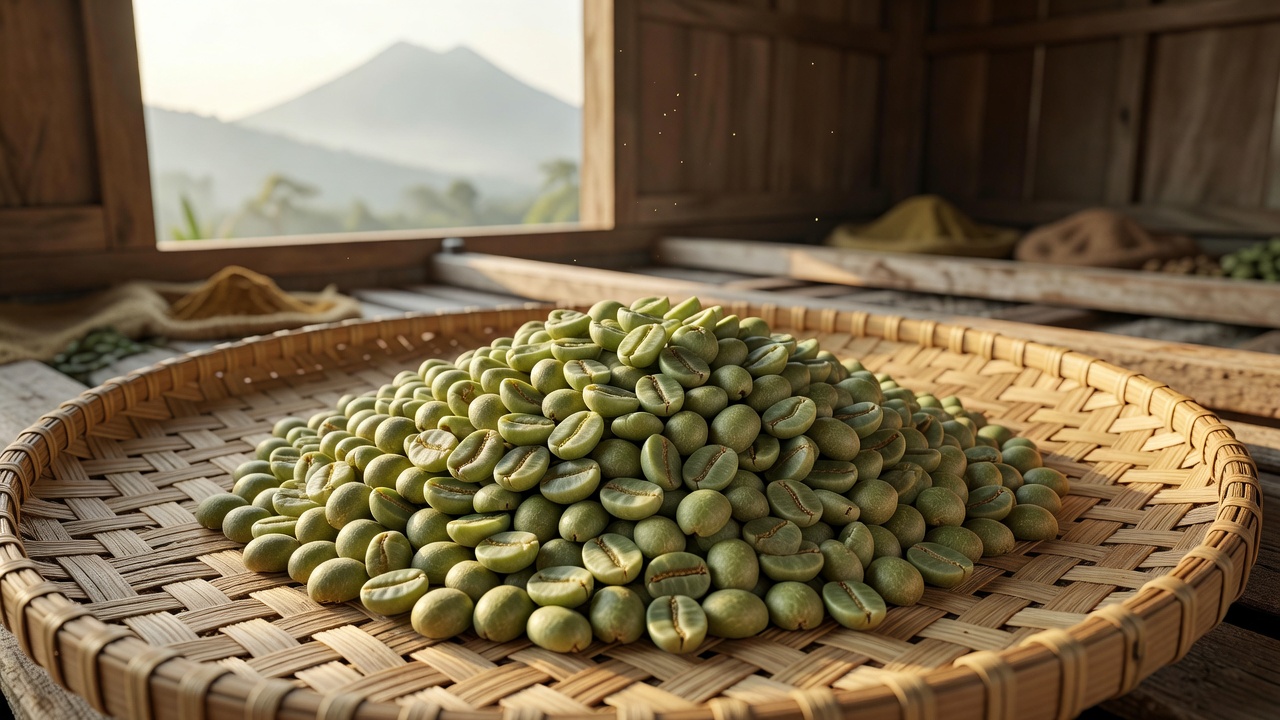
Behind every export shipment of green coffee beans are households whose livelihoods depend on what happens between harvest and payment. In the Tasikmalaya highlands of West Java, that connection gives coffee sourcing a human dimension. TasikSpice supports a network of more than 200 smallholder farming families, connecting Indonesian agricultural origins with international buyers. For importers purchasing Green Coffee Beans, known locally as Kopi Biji Hijau, the sustainability story starts with those families—and becomes meaningful when purchasing decisions reward quality, encourage repeat business, and make supply-chain expectations clear.
For the 2026 season, this is an opportunity to look beyond an attractive origin story. Buyers need coffee that meets commercial specifications, while farming households need a market for the care invested in their crop. Published on September 28, 2026, this guide explains how to approach TasikSpice’s smallholder connection responsibly, which quality decisions influence value, and what evidence buyers should request before placing an order.
Indonesian Green Coffee and 200+ Farming Families
TasikSpice’s connection to more than 200 farming families in the Tasikmalaya highlands is central to its sustainability story. Access to export markets can help smallholders find outlets beyond immediate local sales. However, a family count describes the reach of a sourcing relationship; it does not, by itself, establish higher household income, guaranteed purchase volumes, or environmental improvements. Those outcomes require records and assessment over time.
For an international buyer, supporting this network begins with realistic procurement. Clear specifications, dependable communication, and purchasing plans shared ahead of delivery can reduce uncertainty throughout the chain. Repeat orders can create stronger commercial continuity than isolated purchases, although future demand should never be presented to growers as guaranteed unless it is contractually agreed. Buyers should ask TasikSpice how orders connect to participating producers and how commercial terms are communicated.
Origin transparency matters just as much. TasikSpice’s product offering includes coffee from Java and Sumatra, but these origins should not be treated as interchangeable with the Tasikmalaya family network. A shipment from Sumatra does not automatically support the same West Java households. When the smallholder story is part of a purchasing decision, request the specific lot’s growing area, collection route, and relationship to the participating farming families.
Environmental responsibility also needs evidence. Shade management, soil cover, careful fertilizer use, and appropriate handling of coffee-processing wastewater can contribute to more sustainable production. Their suitability depends on local conditions and processing methods. Buyers should ask which practices are documented for their chosen supply rather than assume every farm follows an identical system. Smallholder production is not automatically organic, and certification claims require valid, applicable documentation.
Green Coffee Beans: Quality That Supports Lasting Value
Sustainability and quality are closely connected because losses during harvesting, drying, or storage reduce the amount of saleable coffee. Selective picking of ripe cherries, separation of damaged fruit, and timely processing help protect the work already invested in cultivation. For buyers, the practical question is whether the exporter can explain the handling of the offered lot and provide a representative sample.
Arabica and robusta require distinct purchasing specifications. Arabica is Coffea arabica; robusta is generally classified as Coffea canephora. Neither a species name nor a highland origin alone establishes cup quality. For Arabica coffee export, request the variety where known, harvest period, processing method, screen distribution, defect assessment, and cup evaluation. For robusta, agree on similarly clear physical and sensory requirements suited to the intended application.
Washed, natural, and honey processing can produce different cup profiles and carry different handling requirements. Drying should be controlled to avoid uneven moisture and unwanted fermentation. Many buyers specify green coffee moisture around 10–12%, but the agreed range, measurement method, and any water-activity requirement should be written into the contract. These are purchasing considerations, not a statement of specifications already verified for TasikSpice’s available stock.
Grading should also be explicit. Screen size describes bean dimensions, while defect counts and cup assessment reveal other aspects of suitability. Buyers exploring specialty coffee Indonesia should request a recent evaluation with the scoring protocol identified, rather than assume the word specialty guarantees a particular score. A sample’s approval should connect to a clearly identified shipment lot and an agreed process for handling material differences.
This attention to quality can support a healthier commercial relationship when payment terms recognize the product delivered. Ask how quality requirements and any associated price differences reach producers. Do not assume that an export premium automatically becomes a farm-level premium. Traceable records of purchasing and payment provide a stronger foundation for a sustainability claim than promotional language alone.
A Coffee Beans Supplier for Responsible 2026 Purchasing
Choosing a coffee beans supplier means evaluating logistics alongside origin and quality. TasikSpice offers pricing on request, quoted FOB Tanjung Priok, Jakarta. A useful inquiry identifies species, origin, processing method, target grade, quantity, packaging, and shipment window. Coffee prices fluctuate, so a quotation should state its validity and the specifications on which it depends. No single indicative price can reliably represent every Indonesian green coffee lot.
Under FOB terms, the seller delivers the goods on board the vessel at the named port, where risk transfers to the buyer. Buyers generally arrange the main ocean freight and any desired cargo insurance. Confirm the applicable Incoterms version and allocation of charges in the contract. For containerized shipments, discuss whether FCA better reflects the actual handover arrangement before agreeing on terms.
Packaging and transit preparation protect the value created at origin. Agree on bag weight, liner requirements, lot markings, and storage conditions. Coffee should be protected from moisture, strong odors, and contamination, with container condition checked before loading. Export documentation commonly includes a commercial invoice, packing list, and transport document; origin certificates, phytosanitary documents, and destination-specific traceability information depend on the transaction and importing market.
To connect your procurement plan with the smallholder story, contact TasikSpice on WhatsApp for 2026 lot availability, samples, sourcing information, and an FOB Tanjung Priok quotation. Ask specifically how the proposed lot relates to the Tasikmalaya farming network. A responsible order starts with that connection made clear, then builds on agreed quality, transparent terms, and evidence that can travel with the coffee.
Interested in sourcing premium Indonesian spices?
Contact TasikSpice on WhatsApp for FOB pricing, samples, and MOQ details.