Sun-Dried Corn Safety: HACCP for Indonesian Maize Exports
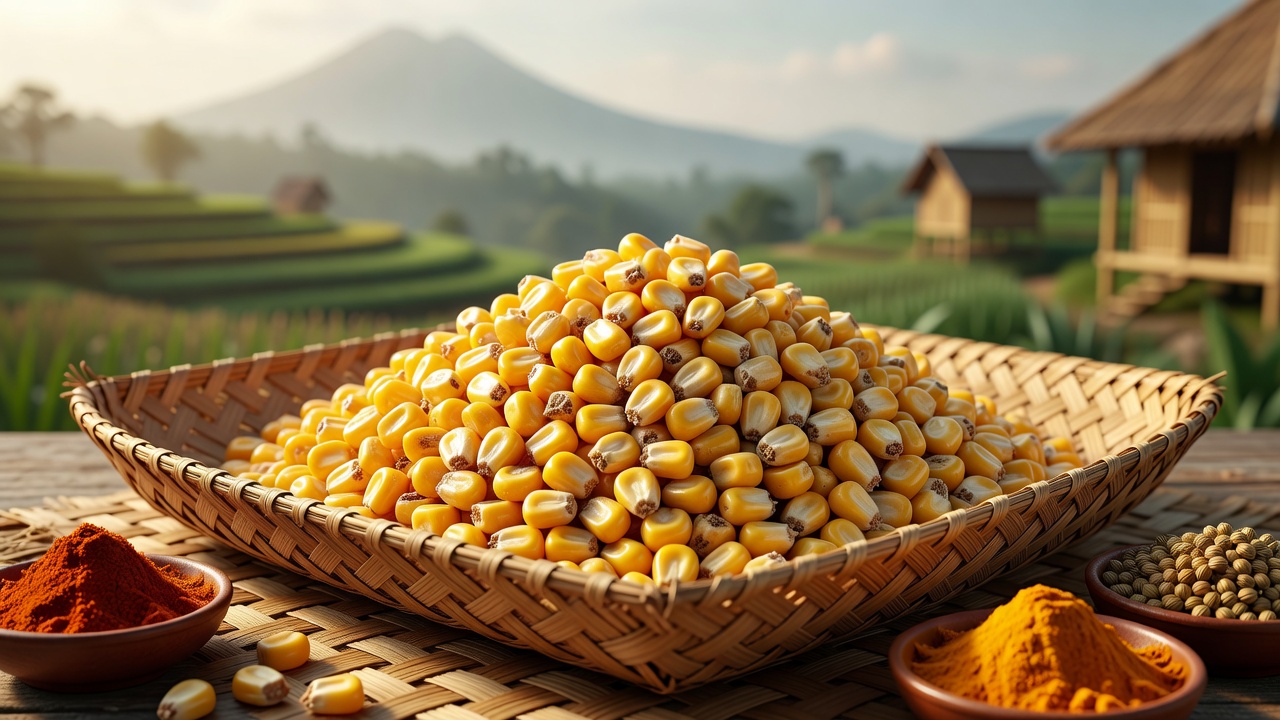
Sun-dried corn, known locally as jagung pipil, is a versatile commodity traded worldwide for animal feed, snack manufacturing, and starch production. Yet producing safe, high-quality dried corn kernels in Indonesia's humid tropical climate is a constant battle against mold, mycotoxins, and physical contaminants. That's why TasikSpice embeds full HACCP principles into every stage of our sun-drying and post-harvest handling. For international buyers seeking a reliable Indonesian corn export, these rigorous food safety protocols mean you can trust every shipment to meet the strictest global standards—from aflatoxin limits to purity. In this article, we break down how HACCP transforms sun-dried maize into a safe, compliant ingredient for your supply chain.
The Hazards of Sun-Drying Corn in a Tropical Climate
Indonesia's corn-producing regions like Lampung and East Java enjoy abundant sunshine—but also high humidity, sudden downpours, and warm nights. These conditions are ideal for the rapid growth of molds such as Aspergillus flavus, which produce aflatoxins—carcinogenic mycotoxins tightly regulated in destination markets. For example, the European Union caps aflatoxin B1 at 20 ppb in feed maize and even lower in food-grade corn. Without disciplined drying, moisture-laden dried corn kernels can spoil within hours, leading to rejection at port and financial loss. Other risks include insect infestation, bacterial contamination, and physical impurities like soil or broken stalks. Applying HACCP thinking from harvest to container stuffing is not optional—it’s the only way to deliver consistent, safe corn maize to demanding buyers.
Hazard Analysis: Biological, Chemical, and Physical Threats
In HACCP’s first principle, we systematically identify what can go wrong. For sun-dried corn, the hazards are:
- Biological: Molds (Aspergillus, Fusarium), bacteria (Salmonella), and storage pests (weevils). Aflatoxin B1, G1, and fumonisins are the most critical concerns.
- Chemical: Pesticide residues from pre-harvest application, heavy metals from soil, and naturally occurring mycotoxins.
- Physical: Stones, stalks, sand, metal fragments, and insect fragments—common in open‑air drying.
By mapping this analysis to our tropical production environment, TasikSpice pinpoints where control is most crucial. For our bulk corn Indonesia buyers, this hazard assessment forms the foundation of every shipment’s safety guarantee.
Critical Control Points in Sun-Dried Corn Production
Not every step is a CCP—but for sun-dried maize, three points are non‑negotiable:
CCP1 – Moisture content after drying: Kernels must reach ≤14% moisture within a critical time window (typically 2–3 days of continuous sun, with frequent turning). We use calibrated moisture meters at our collection centres; any batch exceeding 14% is immediately re‑dried or rejected. This is the single most effective barrier against aflatoxin development.
CCP2 – Drying surface integrity: Our partner farmers use clean concrete patios or tarpaulins, never bare earth. Surfaces are swept before each batch, and workers are trained to remove foreign material visually. This prevents stones, soil, and debris from embedding into the kernels.
CCP3 – Post‑drying sieving and metal detection: After drying, corn passes through a multi‑deck sieve to separate broken pieces and fine dust, then through a magnetic separator and metal detector. This step catches any metal fragments and remaining physical contaminants, ensuring clean dried corn kernels ready for container loading.
TasikSpice monitors these CCPs in real time, logging data for each farmer lot. Corrective actions—like extending drying time or re‑cleaning—are documented and verified before blending.
TasikSpice’s HACCP‑Managed Production in Java and Lampung
Our sourcing network spans the fertile highlands of East Java and the flat plains of Lampung, where two corn harvests per year—including the approaching 2026 season—provide a steady supply. Rather than simply buying from the open market, we work directly with farmer groups, providing training on Good Agricultural Practices and HACCP hygiene. We also supply drying racks, tarpaulins, and moisture meters to ensure consistent technique. At our central conditioning facility, every incoming batch undergoes rapid aflatoxin screening (ELISA kits) and is only accepted if results fall below our internal threshold—far stricter than generic export norms. This integrated approach makes TasikSpice a transparent corn grain supplier, offering full traceability from field to FOB Tanjung Priok, Jakarta.
Testing and Certification: Your Assurance of Quality
Every container of Indonesian corn export from TasikSpice is accompanied by a certificate of analysis (CoA) covering:
– Moisture (% max)
– Aflatoxin total (ppb, by HPLC)
– Purity (% whole kernels)
– Foreign matter (% by weight)
– Test weight (kg/hL)
We also offer optional testing for pesticide residues, heavy metals, and GMO presence upon buyer request. This documentation streamlines clearance with customs and meets the import requirements of the Middle East, South Asia, and Europe—regions where our bulk corn is consistently well‑received.
Why Global Buyers Choose TasikSpice for Safe Corn Maize
When you partner with TasikSpice, you’re not just buying dried corn—you’re investing in a HACCP‑verified supply chain that minimizes risk at every stage. Our 2026 harvest promises the same deep yellow, large‑kernel maize that buyers depend on for feed milling and extrusion. Available in 25 kg, 50 kg, or bulk bag packaging, we tailor orders to your logistics.
Get a quote for your next shipment: Contact our export team directly on WhatsApp at +62 812-9869-9940 to discuss your specifications, current FOB pricing, and shipping schedules. From clean, aflatoxin‑safe corn to reliable documentation, TasikSpice is your trusted partner for dried corn kernels from Indonesia.
Interested in sourcing premium Indonesian spices?
Contact TasikSpice on WhatsApp for FOB pricing, samples, and MOQ details.