Indonesia Cocoa Beans: Quality, Price & Logistics vs Rivals
When sourcing cocoa beans for your manufacturing or trading operations, the country of origin can make or break your margins. With global cocoa prices fluctuating, a strategic shift to Indonesian cocoa—particularly the renowned Sulawesi cocoa—offers buyers a compelling blend of cost efficiency, consistent quality, and logistical speed. In this article, we compare the origin advantages of Indonesian cocoa beans (known locally as Biji Kakao) against the dominant West African and Latin American producers, helping you make an informed decision for the 2026 season.
Price Competitiveness: Indonesian Cocoa’s FOB Advantage
Indonesia is the world’s third-largest cocoa producer, yet its free-on-board (FOB) pricing at Tanjung Priok, Jakarta, often undercuts major origins like Ghana or Ecuador. Bulk cocoa Indonesia benefits from several structural factors: lower labor costs in smallholder farming communities, efficient supply chain networks in Sulawesi and Sumatra, and a competitive rupiah-to-dollar exchange rate. For buyers importing container loads, the FOB price per metric ton from Indonesia can be 10–15% cheaper than equivalent-grade beans from West Africa when factoring in recent export levies in Côte d’Ivoire and Ghana.
At TasikSpice, we work directly with farmer groups in the highland regions of Sulawesi, cutting out intermediaries and passing savings on to you. Our 2026 harvest projections indicate stable supply, allowing us to offer flexible contract terms. Whether you need a single container for niche chocolate production or regular bulk shipments, Indonesian cocoa gives you a price edge without compromising on quality.
Quality Showdown: Fermented Cocoa Beans from Sulawesi
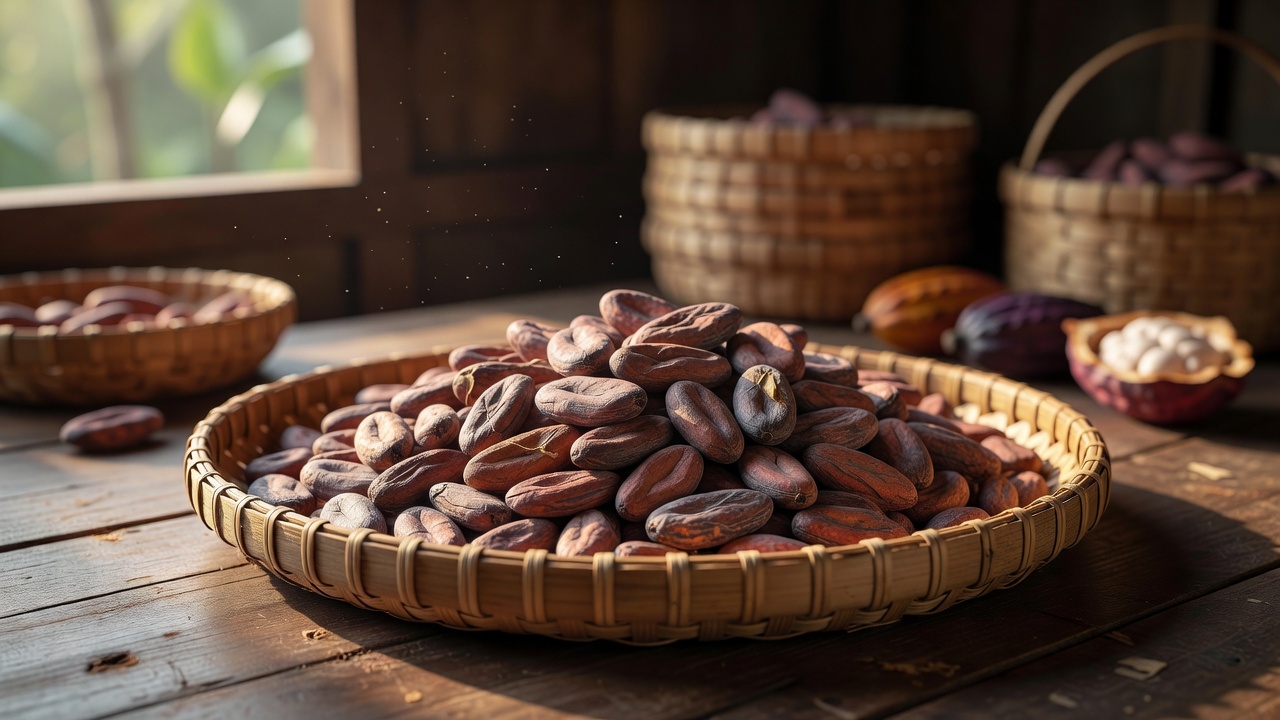
Sulawesi cocoa beans, harvested from Theobroma cacao trees that thrive in volcanic soils, deliver a bold, full-bodied chocolate flavor with distinctive fruity and nutty undertones. These attributes have placed Indonesian beans firmly on the fine flavor map, often compared to Ecuadorian “Arriba” cocoa—but at a more accessible price point. The key to unlocking this flavor is proper fermentation, and TasikSpice’s supply chain emphasizes centrally controlled fermentation boxes and sun-drying on raised beds.
Fermentation Standards and Bean Cut Scores
Fermented cocoa from our Sulawesi partners consistently achieves a bean count of 95–100 beans per 100 grams and a fermentation rate above 85% as verified by the standard cut test. This means uniform, well-fermented beans free from slaty or moldy defects. In contrast, bulk beans from some West African origins often arrive with lower fermentation percentages and a higher proportion of flat, under-fermented beans, which can introduce off-flavors and require additional roasting adjustments. While Indonesian beans are not yet as widely recognized as single-origin premiums from Madagascar or Venezuela, they offer an exceptional cost-to-quality ratio for everyday dark chocolates, confectionery coatings, and even craft bean-to-bar productions looking for a unique Asian terroir.
Logistics and Shipping Efficiency: Indonesia’s Strategic Location
Indonesia’s position straddling the Indian and Pacific Oceans gives it a logistics advantage for buyers in Asia, the Middle East, and even the Indian subcontinent. A shipment from Tanjung Priok to Jebel Ali (Dubai) takes just 10–12 days, versus 20–25 days from Abidjan or Accra. For buyers in India or Singapore, transit times are even shorter. This speed reduces inventory carrying costs and ensures fresher product arrival.
Additionally, TasikSpice manages all export documentation—phytosanitary certificates, certificates of origin, and fumigation—so your container is cleared without delays. We use breathable jute bags and 20-foot containers that can be loaded within 7 days of order confirmation during the main crop season (May–August). Our Jakarta port facilities are well-equipped for bulk cocoa Indonesia shipments, and we work with all major shipping lines to offer competitive freight rates.
Sustainability and Certification: A Growing Differentiator
European and North American markets increasingly demand sustainably sourced ingredients. While Indonesian cocoa has historically lagged behind Latin America in certification coverage, the landscape is shifting rapidly. TasikSpice partners with farming communities transitioning to organic and Rainforest Alliance standards, with 40% of our 2026 crop expected to carry a recognized certification. This addresses buyer concerns about deforestation and child labor—issues that have plagued some West African supply chains. By choosing Indonesian beans, you can align with your customers’ ethical expectations while still achieving cost targets.
2026 Season Outlook and Smart Buying Tips
The 2026 main crop in Sulawesi and Sumatra is forecast to be plentiful, supported by favorable weather conditions and rehabilitation programs replacing older trees with high-yielding hybrids. As a cocoa beans supplier with boots on the ground, TasikSpice can provide pre-shipment samples for your lab analysis. When evaluating any origin, we recommend focusing on three quality markers: bean count (aim for 100 beans/100g or lower), fermentation rate (>85% fully fermented), and moisture content (<8%). These specs ensure consistent roasting and good chocolate yield.
Indonesia checks all these boxes while offering a logistical and pricing package that is hard to beat. Don’t let the 2026 season’s opportunities pass by. Whether you are a seasoned importer or new to Asian origins, our team can guide you through the process—from first enquiry to delivered cargo.
Connect with TasikSpice today. For FOB pricing, sample requests, or technical data sheets, reach us directly on WhatsApp at +62 812-9869-9940. Let’s discuss how bulk cocoa Indonesia can strengthen your supply chain and delight your customers.
Interested in sourcing premium Indonesian spices?
Contact TasikSpice on WhatsApp for FOB pricing, samples, and MOQ details.