Indonesian Clove: Tasikmalaya’s Organic Certification Path
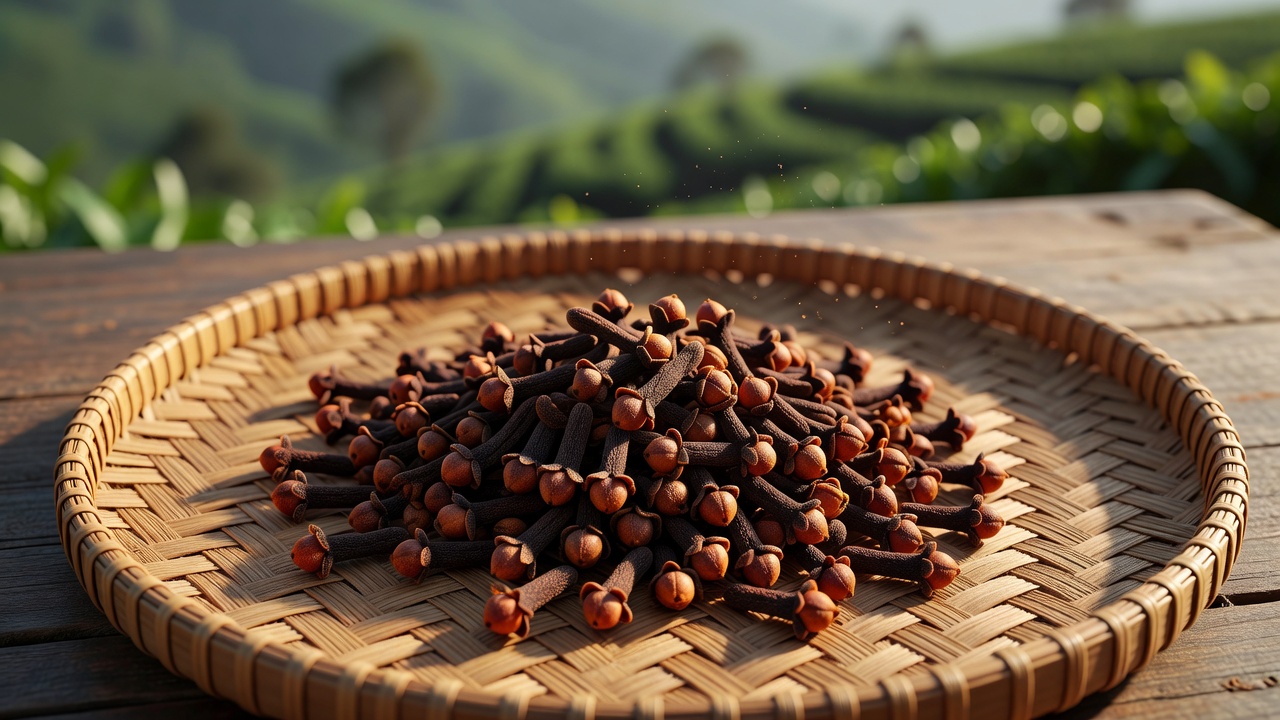
A fragrant clove can tell a buyer something about quality, but it cannot prove how a tree was grown. For international buyers evaluating Indonesia’s 2026 season, that distinction matters. In the Tasikmalaya highlands of West Java, the journey toward pesticide-free clove production must connect changes on the farm with records, independent inspection, and careful handling after harvest. Clove, known locally as cengkeh, offers a compelling opportunity to build that connection between Indonesian farming traditions and documented export requirements.
Clove comes from the dried, unopened flower buds of Syzygium aromaticum. Its distinctive aroma reflects an essential oil in which eugenol is typically the principal component. Yet neither a powerful fragrance nor a highland origin establishes organic status. This guide explains the practical transition pathway relevant to Tasikmalaya growers and TasikSpice buyers; it does not assert that particular farms or TasikSpice lots already hold organic certification.
Indonesian Clove: Moving Toward Organic Certification
The first step is understanding the difference between avoiding pesticides and meeting an organic standard. Organic production generally prohibits most synthetic pesticides and fertilizers, but it can permit specified crop-protection materials. Consequently, “organic” and “pesticide-free” are not interchangeable claims. A grower’s decision to stop spraying is valuable information, but buyers still need a clearly defined claim and supporting evidence.
For a farm beginning its transition, the practical starting point is a documented baseline: plot boundaries, tree locations, previous input use, nearby farming activities, and harvest history. Farmers should record when prohibited inputs were last applied and discuss their intended export market with a qualified certifier. Conversion requirements differ by standard and farm history. For example, EU organic rules generally require at least three years of compliant management before the first organic harvest of perennial crops; the certifier must assess the applicable conditions.
Clove trees remain productive across multiple seasons, so transition planning needs a longer view than a single harvest. Farmers may incur additional labor and recordkeeping costs before their crop becomes eligible for an organic label. During this interval, a lot should be sold under its verified status, without presenting a conversion crop as fully certified organic. Any permitted conversion labeling also depends on the destination’s rules.
Certification planning should begin with the buyer’s destination. EU organic imports and USDA Organic sales have different regulatory frameworks, certification arrangements, and import documentation requirements. A certificate accepted for one market should not automatically be assumed sufficient for another. Farmer groups can explore group certification where eligible, supported by an internal control system that checks members, records inputs, and tracks harvest volumes.
Pesticide-Free Clove Farming Starts With Daily Practices
Reducing dependence on synthetic crop-protection products requires observation and prevention. Regular field checks help farmers notice pest damage, disease symptoms, and changes in tree vigor before losses spread. Pruning, appropriate spacing, sanitation, and drainage can form part of an integrated management approach, adapted with local agronomic advice. Avoiding routine spraying does not mean leaving trees unmanaged.
Soil management also needs attention in highland terrain. Mulch, suitable ground cover, and contour-aware field practices can help protect soil from erosion and conserve moisture. Compost and other fertility inputs must be assessed for suitability and compliance with the chosen standard. Farmers should document their source and application rather than assuming that every material described as natural is automatically acceptable.
Neighboring land introduces another challenge. Spray drift, runoff, shared equipment, or contaminated storage can compromise a carefully managed crop. A transition plan should identify these risks and establish appropriate buffer arrangements, equipment cleaning, and separate input storage. The certifier determines whether the farm’s controls meet the relevant requirements; a universal buffer distance cannot be prescribed for every site.
For smallholder groups, useful records can remain straightforward. A dated notebook or accessible digital register should connect each plot with its inputs, field activities, harvest quantities, and sales. Group coordinators can help farmers maintain consistent records and investigate unusual yield figures. This creates the traceability that buyers need while making certification preparation easier to manage.
Residue testing provides additional evidence, particularly when a buyer has specified target compounds and reporting limits. However, a test covers only the substances analyzed at the laboratory’s detection capability. A result showing no detected residues neither proves that no pesticide was ever used nor replaces organic certification. Farm controls, traceability, inspection, and testing serve complementary purposes.
Whole Clove Quality, Traceability, and Export Buying
Organic ambitions must be matched by reliable product quality. Harvesters generally pick clove buds before the flowers open, when mature buds begin changing color. Careful picking helps preserve the bud and head. Drying should begin promptly on clean, suitable surfaces with protection from rain, soil, animals, and other contamination. Uneven drying or moisture reabsorption can undermine an otherwise well-managed harvest.
For whole clove exports, buyers should agree specifications for moisture, foreign matter, stems, headless or broken buds, and any relevant microbiological or chemical parameters. Commercial grade names alone are insufficient because sellers may use them differently. A description such as eugenol-rich clove should be supported by an agreed analytical basis if oil composition is material to the purchase. Appearance and aroma remain useful checks, but they do not substitute for measurements.
Traceability must continue through collection, grading, packing, and dispatch. Certified, conversion, and conventional material require controls that prevent substitution or unintended mixing. Each shipment should link to identifiable lots and reconciled quantities. Since TasikSpice’s stated sourcing includes Tasikmalaya and Central Java, buyers seeking a specifically Tasikmalaya-origin lot should request that origin explicitly and verify the corresponding documentation.
For buyers comparing bulk clove Indonesia offers in the 2026 season, the quotation should state origin, verified certification status, grade, quantity, packaging, testing requirements, and shipment timing. TasikSpice pricing is available on request, FOB Tanjung Priok, Jakarta. Under FOB terms, delivery and risk transfer occur when the goods are aboard the nominated vessel. Container shipments may be better suited to FCA depending on the handover arrangements, so the contract should specify the agreed Incoterms rule.
Before shipment, confirm packaging that protects against humidity and odor contamination, along with the commercial invoice, packing list, transport document, and any destination-required origin, phytosanitary, or organic documentation. Request certification evidence covering the relevant operator, activity, product, and validity period. To discuss specifications, origin traceability, and available certification evidence, contact TasikSpice on WhatsApp at +62 812-9869-9940. A clear purchasing specification gives farmers and buyers a practical foundation for the next stage of the organic journey.
Interested in sourcing premium Indonesian spices?
Contact TasikSpice on WhatsApp for FOB pricing, samples, and MOQ details.