Indonesian Corn Export: Generations of Harvest Knowledge
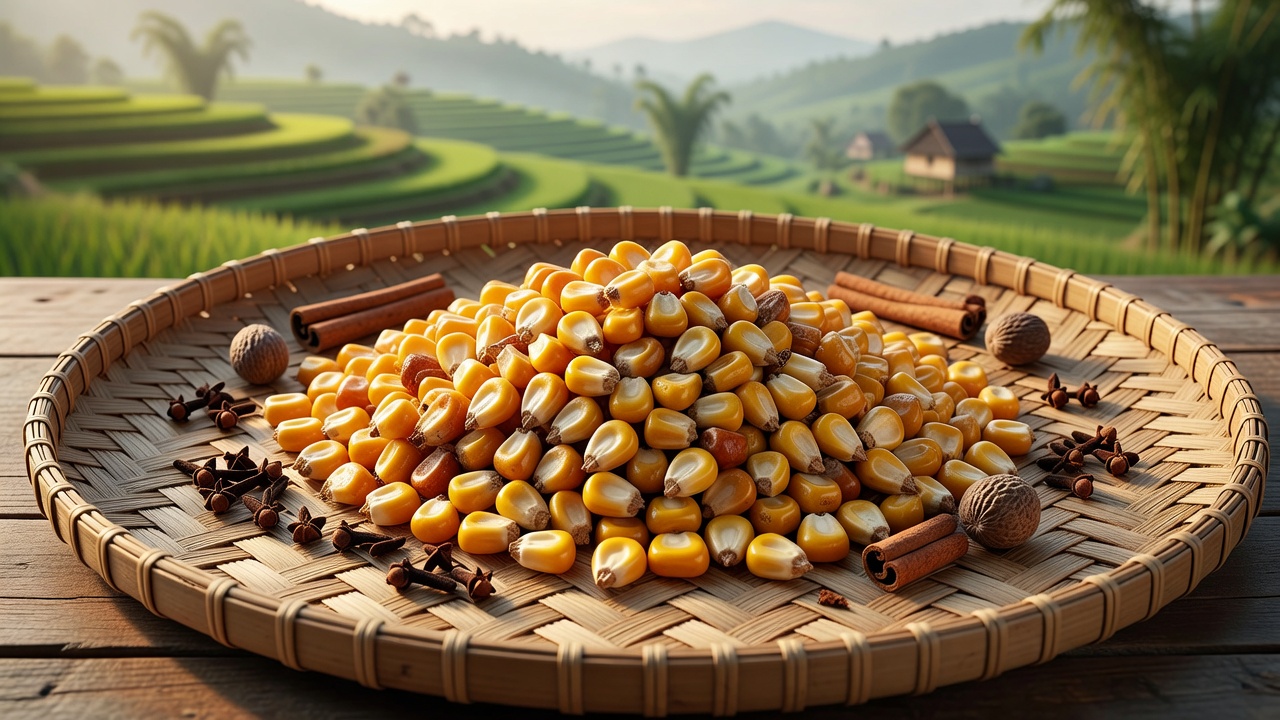
A good corn shipment begins long before a container reaches Jakarta. It begins with decisions made in the field: whether the crop is mature enough, whether rain will interrupt drying, and whether grain can enter storage safely. For TasikSpice in Tasikmalaya, West Java, these decisions offer a meaningful way to discuss Corn (Maize), known locally as jagung pipil. Behind export specifications lies farming knowledge passed between generations—and the responsibility to verify that knowledge with measurable quality checks.
Botanically classified as Zea mays, corn is a cereal rather than a spice. Yet it belongs in a broader conversation about the agricultural experience behind Tasikmalaya’s spice trade. Careful harvesting, clean handling, and protection from moisture matter across both product groups. For international buyers considering the 2026 season, understanding those connections helps explain what deserves attention when sourcing Indonesian grain.
TasikSpice lists Java and Lampung as origins for its corn offering. A Tasikmalaya business location should therefore not be taken to mean every shipment was grown in the surrounding highlands. The generational roles described below are an illustrative sourcing framework, not profiles of named, interviewed TasikSpice suppliers. Actual farm origins, handling records, and lot specifications should be confirmed for each purchase.
Generational Knowledge Behind Indonesian Corn Export
The first profile is the experienced grower: someone who reads crop development alongside local weather patterns. Older farmers may judge harvest readiness through husk condition, kernel firmness, and their knowledge of how particular fields mature. These observations help organize harvesting, but they cannot establish an export moisture specification by themselves. Grain intended for a commercial contract still needs representative sampling and a suitable, calibrated moisture meter.
The value of this experience is practical. Harvesting too early can increase drying requirements and leave more immature kernels. Waiting too long under unfavorable field conditions can expose ears to weather damage, insects, and fungal infection. A grower familiar with local conditions can help navigate that tradeoff, while recognizing that planting dates, varieties, and rainfall prevent a single harvest calendar from fitting all of Java and Lampung.
The second profile is the family member responsible for post-harvest handling. This role connects field decisions with the grain buyers eventually receive. Sorting damaged ears, keeping harvested material away from bare soil, and scheduling shelling and drying require close attention. Knowledge often travels through demonstration: how equipment settings affect breakage, how wet grain behaves in a pile, and why clean drying surfaces matter.
The third profile is the next-generation record keeper. A younger farmer or collection coordinator can connect established practices with batch identification, moisture readings, weighing records, and laboratory results. Digital tools can make those records easier to retrieve, but consistency matters more than the technology. Together, these three roles show how inherited judgment and documented evidence can strengthen Indonesian corn export supply chains.
From Family Harvest Practices to Bulk Corn Indonesia Specifications
For buyers searching for bulk corn Indonesia, “premium” should describe a defined and verified lot rather than serve as a substitute for specifications. A family’s careful work becomes commercially useful when the buyer and seller agree on measurable acceptance criteria. These should reflect the intended application, whether food manufacturing, ingredient processing, or animal feed, along with the destination market’s requirements.
Moisture is a useful starting point. Buyers commonly discuss maximum levels around 14%, but the appropriate contractual limit depends on storage duration, climate, end use, and transport conditions. That figure is an illustrative discussion point, not a confirmed TasikSpice specification. A single reading is also insufficient if a lot contains unevenly dried grain; sampling must account for variation across the shipment.
Shelling is another place where experience affects measurable quality. Equipment adjustment and grain condition influence the proportion of broken kernels. Excessive breakage creates fines, complicates cleaning, and can increase vulnerability during storage. Cleaning and grading should then separate unwanted material and help produce a more uniform lot without implying that visibly clean grain is automatically safe.
- Physical quality: Agree limits for broken kernels, foreign matter, damaged grain, and live insect presence.
- Condition: Specify moisture, acceptable odor, and freedom from visible mold, supported by representative inspection.
- Safety: Define relevant mycotoxin and residue requirements for the destination and intended use, including sampling and testing arrangements.
- Traceability: Request the declared origin, lot identification, handling information, and available inspection records.
For feed corn Indonesia purchases, mycotoxin control deserves particular attention. Aflatoxins cannot be reliably assessed by appearance or smell, and drying does not reliably remove contamination already present. Laboratory testing should use an agreed sampling approach because contamination can be unevenly distributed. Food-use buyers may require different or additional controls; feed suitability does not establish food suitability.
These requirements give generational knowledge a clear commercial purpose. The experienced grower helps protect the crop, the handling specialist helps preserve the grain, and the record keeper helps demonstrate what happened. None replaces independent verification where the contract or destination requires it. Their combined contribution is a stronger foundation for evaluating a corn grain supplier.
Buying the 2026 Season: Traceability, FOB Pricing, and Shipping
As of September 26, 2026, buyers should request current lot information rather than assume that a seasonal label guarantees recent harvesting or uniform quality. Ask when the grain was harvested, dried, and placed in storage, and whether material from different origins or harvest periods has been combined. Availability and lead times should be confirmed against the specific quantity and specification requested.
TasikSpice’s stated pricing basis is Contact us—FOB Tanjung Priok, Jakarta. A useful quotation request includes volume, end use, destination, quality limits, packaging, and shipment timing. Under FOB Incoterms 2020, the seller delivers the goods on board the buyer-nominated vessel at the named port; the buyer generally arranges main ocean freight and any desired cargo insurance. For containerized movements, confirm whether FCA better matches the actual terminal handover.
Packaging and logistics should preserve the quality established upstream. Agree suitable bags or other available loading arrangements, inspect containers for cleanliness and water ingress, and address condensation risks. Confirm applicable documentation before shipment, including commercial and packing documents, transport documents, and any required phytosanitary, origin, inspection, or laboratory certificates. Requirements vary by destination; importing-country eligibility should be checked before committing to a purchase.
To discuss the 2026 season, contact TasikSpice on WhatsApp with your specifications and destination. Request current Java or Lampung origin options, supporting lot information, and an FOB quotation. That conversation connects the knowledge behind the harvest with the evidence international buyers need to make a sound sourcing decision.
Interested in sourcing premium Indonesian spices?
Contact TasikSpice on WhatsApp for FOB pricing, samples, and MOQ details.