Indonesian Corn: Post-Harvest Processing for Export Value
A corn shipment can look clean at loading and still lose value before it reaches the buyer. Uneven drying, hidden mold damage, and moisture migration during transport can turn a promising harvest into a costly quality dispute. For Indonesian corn, locally called jagung pipil, post-harvest processing is where dependable commercial value begins. Buyers planning purchases from the 2026 season should examine how grain is dried, sorted, stored, and, where appropriate, transformed through controlled fermentation.
Corn, or maize (Zea mays), is a cereal rather than a spice, so it requires a different processing approach from aromatic seeds or cured pods. TasikSpice, an Indonesian exporter based in Tasikmalaya, West Java, presents corn of Java and Lampung origin to international buyers. Understanding the distinction between stabilizing raw grain and manufacturing a fermented ingredient helps buyers choose a product that fits its intended use.
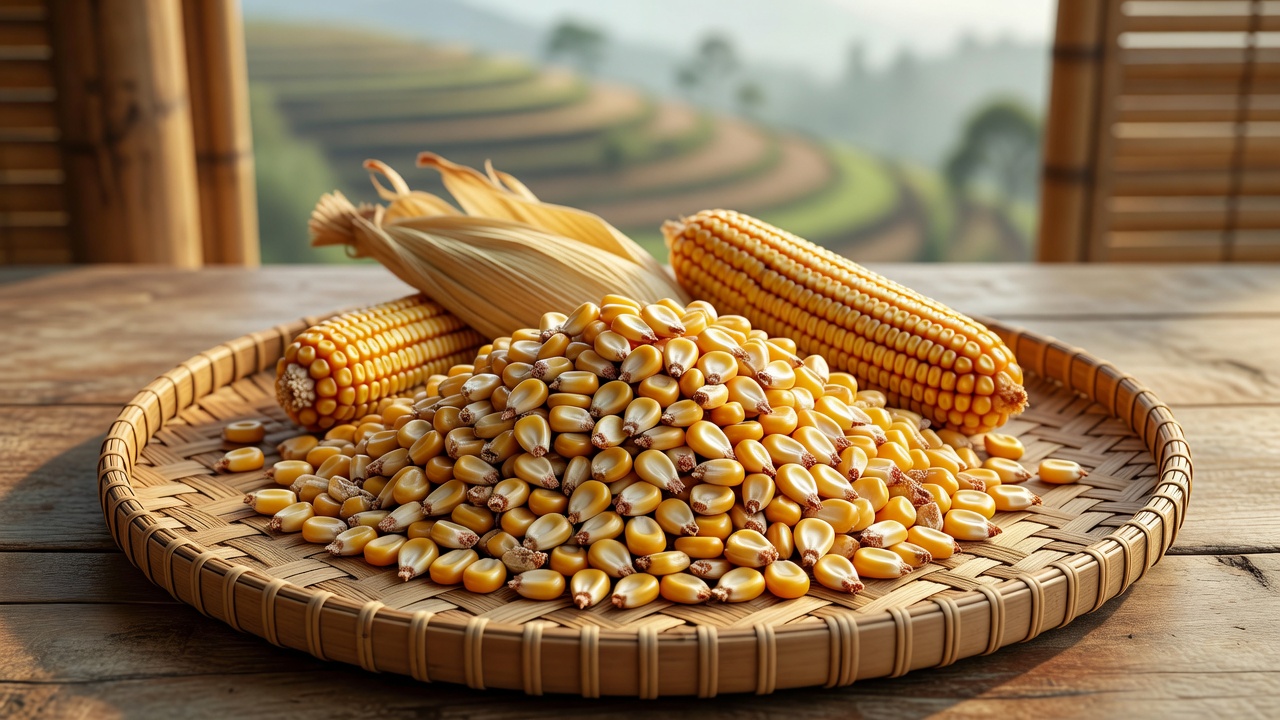
Dried Corn Kernels: Drying and Grading Come First
Good processing starts with mature, sound ears and prompt handling after harvest. Farmers and collectors should separate visibly moldy, insect-damaged, or weather-damaged material before it enters a shared lot. Harvest dates alone do not establish readiness: kernel moisture, crop maturity, and field conditions must guide decisions. For the 2026 season, procurement teams should request lot-specific harvest and drying information instead of assuming that all grain from one region has the same condition.
Shelling should minimize cracked kernels, which are more vulnerable to insects and fungal deterioration. Depending on the equipment and local workflow, ears may undergo initial drying before shelling, followed by further drying of the grain. Clean drying surfaces, protection from rain, and separation from soil and animals are basic controls. Mechanical drying can improve consistency, but excessive temperatures can damage starch functionality, discolor grain, and reduce suitability for particular food applications.
For conventional dry storage, around 13–14% moisture is a common commercial reference range, not a universal guarantee of safe storage. The appropriate target depends on temperature, storage duration, packaging, and buyer specifications; longer storage in warm conditions may require lower moisture. Measure several representative samples with a calibrated meter and confirm the contractual test method. An acceptable lot average can conceal wetter pockets that deteriorate during shipment.
Cleaning and grading create value without changing the grain into another product. Screens remove oversized debris and fines, aspiration removes light material, and suitable separation equipment reduces stones and metal contamination. Optical sorting can help remove discolored kernels. Buyers comparing dried corn kernels should agree on measurable limits for moisture, foreign matter, broken kernels, damaged kernels, and insects rather than relying on loosely defined labels such as premium or export grade.
Drying prevents further deterioration under suitable conditions; it does not reliably remove mycotoxins already present. Aflatoxins and fumonisins deserve particular attention in maize, with sampling and testing matched to the destination and intended food or feed use. Codex cereal mycotoxin prevention guidance emphasizes controls throughout harvesting, drying, and storage. Because contamination can be unevenly distributed, a representative sampling plan matters as much as the laboratory result.
Fermentation, Curing, and Practical Corn Value Addition
Fermentation can create a distinct ingredient or feed product, but it should begin with an identified market and a validated process. Food manufacturers may ferment milled or soaked corn using selected cultures to develop acidity, flavor, or processing characteristics. Feed operations may use controlled anaerobic fermentation of suitable high-moisture corn. These processes have different specifications and logistics from ordinary dry grain exports and should never be treated as interchangeable.
A commercial fermentation specification should define the starting material, water quality, culture where used, temperature, duration, acidity targets, hygiene controls, and storage conditions. A drop in pH alone does not prove that every hazard has been controlled. Nor should fermentation be offered as a dependable way to make mycotoxin-contaminated grain acceptable. Any claimed reduction requires process-specific evidence and compliance with applicable limits.
Fermented corn may require refrigeration, sealed storage, or a validated drying step, depending on the product. Drying after fermentation adds energy costs and can change aroma, texture, and microbial viability. Before commissioning production, buyers should agree on the finished product's moisture, microbiological criteria, packaging, shelf life, and intended application. A trial batch is especially useful when the ingredient will enter an established manufacturing recipe.
Curing needs equally careful terminology. Unlike vanilla, corn does not typically undergo an aroma-development curing process. In grain handling, conditioning or tempering may describe a controlled period that allows moisture to redistribute within kernels between processing stages. Properly managed, this can support more uniform drying or milling. It is not a reason to leave damp grain piled in uncontrolled conditions, where heating and mold can develop.
Other value-add options include dehulling, degermination, milling into grits or flour, and roasting for defined food applications. Each changes the buyer specification: flour needs particle-size controls, while products retaining more germ may require particular attention to oxidative stability. For many bulk buyers, the most useful improvement remains straightforward: consistently dried, carefully cleaned grain supported by traceable records.
Choosing a Corn Grain Supplier for Indonesian Exports
A reliable corn grain supplier should connect every quality claim to a defined lot. Request origin information, processing records, a representative sample, and a certificate of analysis covering the agreed parameters. For buyers sourcing feed corn Indonesia, distinguish nutritional purchasing criteria from statutory safety requirements. Food manufacturers should separately establish food-grade handling and destination-specific contaminant limits; suitability for feed does not establish suitability for food.
Packaging and container preparation protect the processing investment. Grain should be sufficiently cool and stable before loading, with clean, dry packaging selected for the handling method. Inspect containers for water ingress, odors, residues, and structural damage. Moisture barriers, liners, or desiccants should be chosen for the shipment conditions; none compensates for loading wet grain. Record loading condition, lot identification, and seal numbers for traceability.
For bulk corn Indonesia enquiries, TasikSpice pricing is available on request, quoted FOB Tanjung Priok, Jakarta. Ask the quotation to identify grade, quantity, packing, loading window, and the applicable Incoterms version. Under FOB, delivery and risk transfer occur when the goods are on board the nominated vessel; buyers should budget separately for main carriage and other applicable destination costs. For containerized shipments, discuss whether FCA better matches the actual handover arrangement.
Document requirements depend on the destination and product form. Confirm the commercial invoice, packing list, transport document, and any required phytosanitary certificate, origin evidence, treatment records, or import authorization before dispatch. To discuss Java or Lampung corn for your 2026 procurement program, contact TasikSpice on WhatsApp with your intended use, required specifications, destination, and volume. These details allow a meaningful discussion of processing options and an appropriate FOB quotation.
Interested in sourcing premium Indonesian spices?
Contact TasikSpice on WhatsApp for FOB pricing, samples, and MOQ details.