Indonesian Nutmeg: Climate, Origin and Export Quality
A spice’s origin tells a story, but its quality must stand up to inspection. For buyers sourcing Indonesian nutmeg, that distinction matters: tropical growing conditions help develop the crop, while harvesting, drying and storage determine whether its commercial value survives the journey overseas. Nutmeg (pala), botanically Myristica fragrans, offers a useful lens for understanding Indonesia’s climate advantages—and why a supplier’s location should never be confused with the origin of its products.
TasikSpice is based in the Tasikmalaya highlands of West Java and offers nutmeg originating from North Sulawesi and Maluku. As buyers evaluate the 2026 season, the strongest sourcing approach combines regional knowledge with documented lot quality. Tasikmalaya’s growing environment provides context for discussions about cardamom and candlenut, but it does not establish the growing conditions or superiority of nutmeg harvested elsewhere.
Climate Advantages: From Tasikmalaya to Nutmeg Origins
Tasikmalaya’s varied elevations and terrain create local differences in temperature, rainfall exposure and soil drainage. In suitable locations, tropical moisture and moderated temperatures can support diverse spice-growing systems. Cardamom can benefit from managed shade and adequate moisture, while candlenut performance also depends on drainage, tree establishment and site suitability. These are agronomic advantages to investigate, rather than proof that every local harvest is superior.
Calling any region’s microclimate unique requires local measurements; calling its spices superior requires comparative evidence. For cardamom, buyers might compare aroma, capsule condition and relevant analytical results. For candlenut, kernel integrity, moisture and signs of rancidity are more useful than a broad climate claim. Variety, farm management and post-harvest practices can influence outcomes as much as growing location.
Nutmeg follows the same principle, although its production geography differs. Native to the Maluku Islands, Myristica fragrans is associated with warm, humid tropical conditions. Adequate rainfall and well-drained soils support tree growth, while waterlogging and prolonged unfavorable conditions can create production challenges. North Sulawesi and Maluku both have established connections to Indonesian nutmeg production, but individual farms and harvest lots still vary.
The commercial lesson is straightforward: climate creates potential, and handling protects it. A humid environment that supports trees can also make drying more difficult. Buyers should therefore ask how suppliers manage the transition from freshly harvested fruit to stable, packaged kernels. TasikSpice’s West Java base and its stated nutmeg origins belong in separate fields on a sourcing record, helping buyers maintain clear traceability.
Bulk Nutmeg Indonesia: Turning Origin into Specifications
Searches for bulk nutmeg Indonesia often begin with price and availability. A more reliable purchasing decision begins with intended use. A manufacturer grinding nutmeg for seasoning blends may prioritize aroma consistency and processing yield, while a distributor selling whole kernels may place additional weight on appearance, size uniformity and low breakage. Both need an agreed food-safety specification.
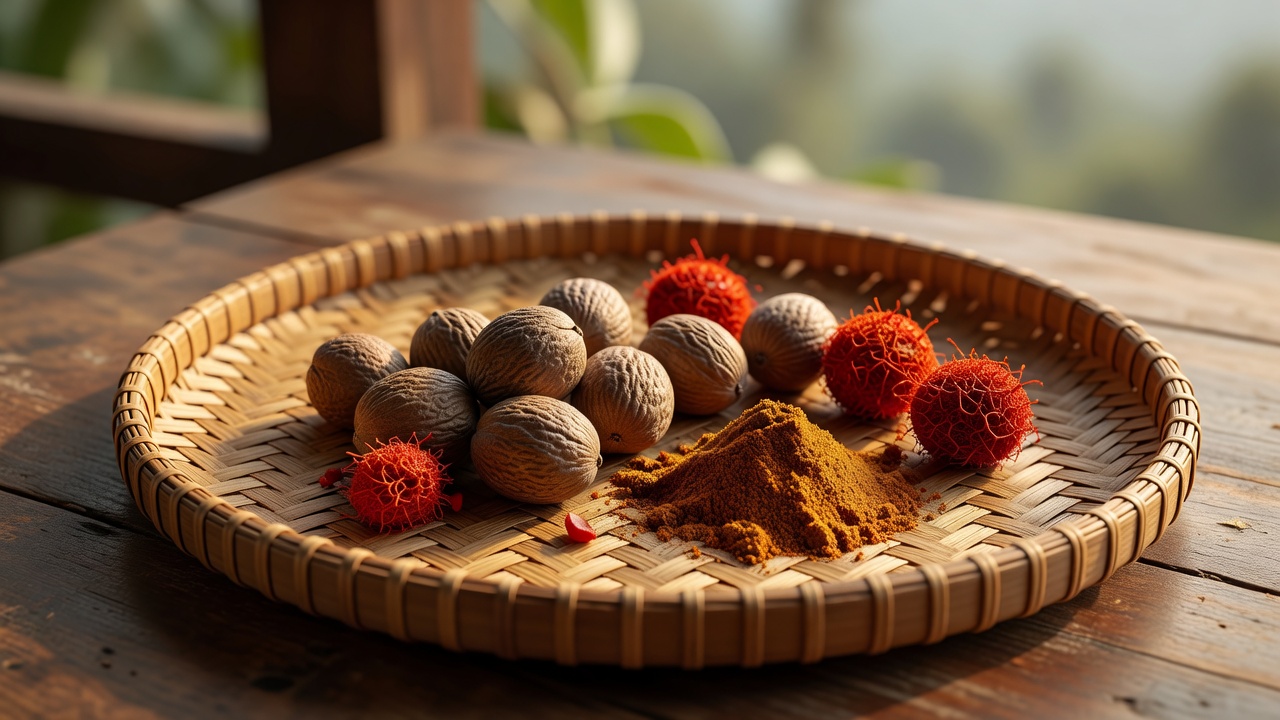
Harvest maturity affects the starting material. Nutmeg fruit typically splits as it ripens, revealing the seed surrounded by the red aril used to produce mace. Prompt collection and clean handling help limit deterioration. After separation, the seeds require controlled drying, followed by shell removal and sorting as appropriate for the contracted product. Rushing these stages can produce unevenly dried material or unnecessary kernel damage.
For the 2026 season, evaluate representative samples against a written specification rather than relying on a grade name alone. Commercial terms can vary between suppliers, so every designation should be explained through measurable acceptance criteria. A useful inquiry should address:
- Product form: Whole or broken kernels, with shell status clearly stated.
- Physical quality: Size distribution, breakage, insect damage, foreign matter and visible defects.
- Moisture: An agreed maximum, test method and sampling procedure appropriate to the product.
- Aroma: Sensory acceptance criteria and, where relevant, volatile-oil testing using an agreed method.
- Food safety: Destination-specific requirements for mycotoxins, pesticide residues and microbiological parameters.
- Traceability: Declared origin, lot identification and available harvest or processing records.
Nutmeg requires particular attention to mold prevention and mycotoxin controls. A clean appearance or pleasant aroma cannot establish compliance with aflatoxin limits. Buyers should request appropriate laboratory evidence linked to the offered lot, with sampling and testing aligned to the destination market. Moisture control helps protect quality, but it does not replace contaminant testing.
A dependable nutmeg spice supplier should explain what has been measured, what is contractually guaranteed and what requires further verification. Climate descriptions can enrich a product story; they cannot replace a certificate of analysis or inspection. Contact TasikSpice on WhatsApp to discuss origin, intended application and the specifications needed for your next inquiry.
Indonesian Nutmeg Export: Pricing and Logistics in 2026
For Indonesian nutmeg export purchases, TasikSpice’s stated pricing basis is Contact us—FOB Tanjung Priok, Jakarta. A meaningful quotation needs the product form, grade definition, quantity, packaging, testing requirements and shipment window. These variables affect preparation costs and commercial terms, so a generic market price should not be treated as an offer for a particular lot.
Under FOB Incoterms 2020, the seller delivers the goods on board the buyer-nominated vessel at the named port, where risk transfers to the buyer. Main ocean freight and insurance arrangements should be clearly allocated. For containerized cargo handed over at a terminal before loading, buyers and sellers should also consider whether FCA better reflects the actual delivery process.
Packaging and transport planning should protect dried nutmeg from moisture uptake, contamination and foreign odors. Specify suitable food-contact packaging, closure methods and lot markings. Before stuffing, inspect the container for cleanliness, dryness, leaks and odors. Condensation management must match the route and cargo conditions; adding desiccants does not compensate for inadequately dried product.
Documentation commonly includes a commercial invoice, packing list and transport document, with certificates of origin, phytosanitary documents or other evidence supplied where applicable. Requirements depend on destination, product form and buyer obligations, so confirm them before booking. Transit from the producing region to Jakarta should also be included in the shipment schedule.
As of September 25, 2026, buyers should request current lot availability and lead times rather than infer supply from general harvest patterns. Indonesia’s climate and spice heritage provide a strong foundation, while transparent origin records and verified handling make that foundation commercially useful. Message TasikSpice for a nutmeg quotation with your destination, volume and quality requirements to begin a focused sourcing discussion.
Interested in sourcing premium Indonesian spices?
Contact TasikSpice on WhatsApp for FOB pricing, samples, and MOQ details.