Indonesian Vanilla Beans: New Export Frontiers in 2026
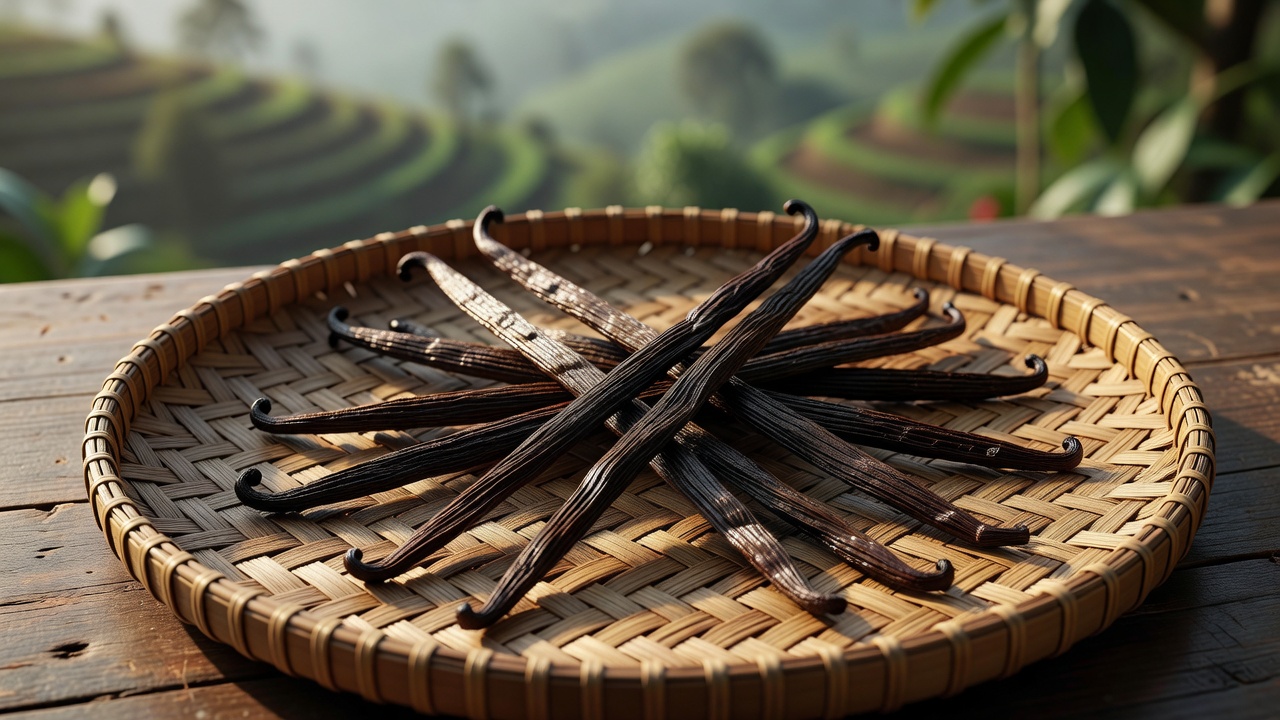
The next promising customer for Indonesian vanilla beans may be a bakery ingredient distributor in Nairobi, a chocolate maker in Warsaw, or an ice cream producer in Almaty. For exporters, these markets deserve careful exploration: each has distinct purchasing habits, distribution networks, and price expectations. Indonesian vanilla, known locally as vanili, offers a compelling starting point for buyers seeking natural flavor with a traceable origin. As the 2026 season progresses, the opportunity is to match the right beans, specifications, and shipment size to a clearly defined customer.
Market perspective dated October 6, 2026. This article outlines potential market-entry opportunities rather than claiming verified growth rates or confirmed orders. TasikSpice, an Indonesian spice exporter based in the Tasikmalaya highland area of West Java, presents Java and Bali origins within this practical approach to international trade.
Vanilla Beans in Africa, Eastern Europe and Central Asia
Africa should not be treated as a single emerging market. Madagascar and Uganda already have established vanilla production, while other countries offer potential customer segments in food manufacturing, hospitality, and ingredient distribution. Indonesian suppliers therefore need a specific commercial proposition, such as an approved flavor profile, suitable packaging, or dependable order fulfillment. Origin alone will rarely persuade buyers who can already source African vanilla.
South Africa and Kenya are examples of markets worth screening for specialist food distributors, premium bakeries, and hospitality suppliers. However, the presence of these businesses does not establish demand for a particular shipment. Before quoting, determine whether a prospective customer purchases whole beans, vanilla extract, or compounded flavorings. Whole pods serve a different application and budget from low-cost vanilla-flavored ingredients.
Eastern Europe also requires country-level planning. Poland and Romania operate within the European Union's food import framework, while non-EU destinations have their own requirements. Artisan confectionery, pastry production, and premium dairy products are possible entry points for natural vanilla. Buyers may prioritize consistent sensory performance and documented food safety over the visual appeal that matters to retail customers purchasing individual pods.
In Central Asia, Kazakhstan and Uzbekistan provide useful starting points for distributor research. Their landlocked geography makes inland transport, customs arrangements, and stock planning especially important. Kazakhstan participates in the Eurasian Economic Union; Uzbekistan follows a separate national framework. An importer serving one country should not automatically be assumed to have regulatory coverage or distribution capability across the region.
Across all three regions, a sensible first step is a qualified buyer list followed by samples and a modest trial order. Ask about annual usage, preferred format, target applications, and acceptable landed cost. These conversations distinguish real purchasing potential from broad assumptions about an emerging market.
Choosing an Indonesian Vanilla Pod Supplier
Most commercial Indonesian vanilla beans belong to Vanilla planifolia. Their export value depends on growing conditions, harvest maturity, curing, and storage. Pods should be harvested at appropriate maturity, commonly assessed through changes such as yellowing at the blossom end. Immature harvesting can limit flavor development even when subsequent processing is carefully managed.
Curing generally involves killing or blanching, sweating, drying, and conditioning. These stages develop the aroma associated with cured vanilla while reducing moisture for storage. A well-managed process balances flavor development with microbial control. Neither a dark appearance nor a strong initial smell, by itself, establishes that a lot is suitable for export.
For buyers comparing Java and Bali vanilla beans, the most useful evidence is lot-specific. Regional origin can support traceability and product storytelling, but it does not guarantee a particular vanillin concentration or sensory profile. Evaluate representative samples in the intended application: a pod that performs well in custard may produce a different result in chocolate or a commercial extraction process.
Grade names such as gourmet, Grade A, and extraction grade are commercial conventions rather than a universally harmonized standard. A reliable vanilla pod supplier should translate those labels into agreed specifications:
- Size and appearance: Define length bands, split-pod allowances, flexibility, and acceptable cosmetic defects.
- Moisture: Agree a tested range suitable for the application; supple culinary beans and drier extraction beans serve different needs.
- Flavor chemistry: If vanillin content is specified, identify the analytical method and whether results are reported on an as-received or dry-weight basis.
- Food safety: Set relevant microbiological, pesticide-residue, and contaminant criteria according to destination rules and buyer requirements.
- Traceability: Request lot identification, declared origin, packing details, and available harvest and curing records.
For 2026-season procurement, clarify whether a quotation concerns newly harvested pods, fully conditioned beans, or inventory from an earlier harvest. Harvest year and shipment year are not interchangeable. Buyers should approve the condition and performance of the actual offered lot before committing to a larger program.
FOB Pricing and Export Logistics for New Markets
TasikSpice's product pricing is contact us, FOB Tanjung Priok, Jakarta. A meaningful quotation requires quantity, origin preference, grade specifications, packaging, and shipment timing. Vanilla prices can vary substantially with quality and availability, so an unsupported headline price is a poor basis for comparing suppliers.
Under FOB Incoterms 2020, the seller delivers the goods on board the buyer-nominated vessel at the named port, with export clearance handled by the seller. The buyer normally arranges main freight, insurance if desired, and destination import costs. FOB applies to sea and inland-waterway transport. For air shipments or containerized deliveries handed to a carrier before loading, discuss whether FCA better reflects the actual handover.
Importers should compare landed cost per usable kilogram, including freight, brokerage, duties, inland transport, and expected processing yield. This is particularly relevant for Central Asian destinations, where the journey continues beyond a seaport. Smaller trial shipments may justify air freight despite a higher transport cost per kilogram.
Use food-contact-compliant packaging with appropriate moisture and aroma protection, supported by robust outer cartons. Vacuum packing may suit some specifications, but it does not correct inadequately cured beans. Confirm storage instructions, protect shipments from heat and condensation, and agree documentation before dispatch. Typical documents include the commercial invoice and packing list; certificates of origin, phytosanitary documents, and testing requirements depend on the destination and product classification.
Ready to evaluate Indonesian vanilla for your market? Contact TasikSpice on WhatsApp with your destination, application, quantity, and required specifications to discuss Java or Bali origin, sample availability, and an FOB Tanjung Priok quotation.
Interested in sourcing premium Indonesian spices?
Contact TasikSpice on WhatsApp for FOB pricing, samples, and MOQ details.