Indonesian vs Global Vanilla Beans: Buyer's Origin Guide
After three turbulent seasons of cyclone damage in the Indian Ocean and volatile pricing, vanilla buyers in 2026 are rethinking a question they had long stopped asking: where should our beans actually come from? For decades the answer was automatic, but today procurement teams across Europe, the Middle East, and South Asia are actively qualifying new origins, and Indonesian vanilla beans have moved from niche alternative to strategic second source. Known locally as vanili, Vanilla planifolia grown in the highlands of Java and Bali now competes directly with long-established origins on flavor, price, and reliability. This guide compares the world's major vanilla origins so you can decide which one fits your formulation, budget, and supply chain.
The 2026 Vanilla Market: Why Origin Diversification Matters
Madagascar remains the industry reference point, supplying roughly three-quarters of global volume and defining the classic Bourbon profile. But concentration carries risk. Cyclones such as Gamane in 2024 damaged vines across the SAVA region, and every disruption sends contract prices swinging by hundreds of dollars per kilogram. Add a narrow harvest window running from roughly July through December, and buyers end up holding expensive inventory for half the year.
A quick snapshot of competing origins:
- Madagascar: benchmark flavor and scale, but weather-exposed, strictly seasonal, and prone to speculative pricing.
- Uganda: bold, chocolate-forward beans with two annual harvests, though volumes remain modest and inland freight adds cost.
- Papua New Guinea: interesting Tahitian-type material, but curing consistency and port infrastructure still vary widely.
- Mexico and India: production is growing, yet strong domestic demand keeps most volume off the export market.
- Indonesia: the world's dependable number-two supplier, offering staggered regional harvests, competitive pricing, and direct access to Asian and Middle Eastern ports.
Quality Compared: What Indonesian Vanilla Planifolia Delivers
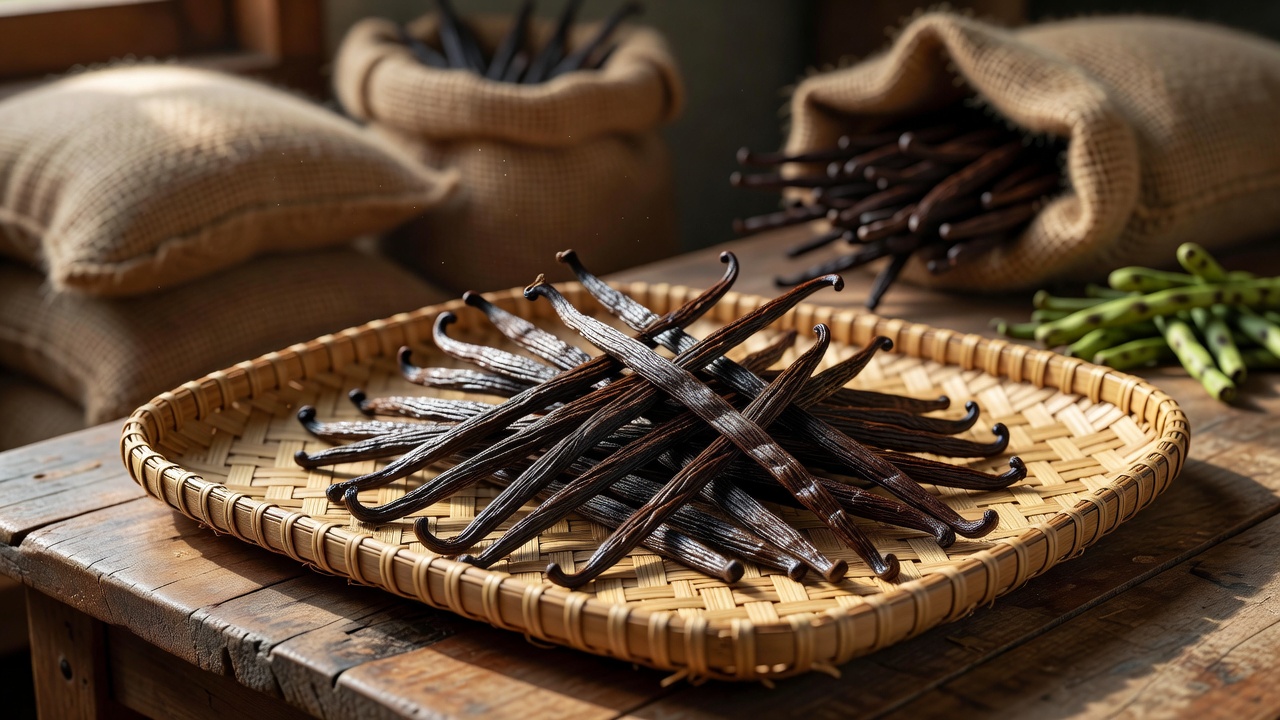
Every commercial vanilla bean starts the same way: an orchid flower pollinated by hand, followed by eight to nine months of pod maturation on the vine. What separates origins is climate, soil, and above all post-harvest craft. In the volcanic highlands of West Java around Tasikmalaya, and among smallholder growers in Bali, pods are picked at peak maturity, then killed, sweated, and slow-dried over three to six months using traditional methods refined over generations.
Well-cured Indonesian vanilla beans meet export specifications buyers recognize instantly:
- Pod length of 14–18 cm or more, dark brown to black, supple and oily to the touch
- Moisture content between 30–35% for Grade A whole beans
- Natural vanillin content typically 1.6–2.4%, with premium lots exceeding 2%
- Low split and red-bean ratios when lots are graded manually before packing
In blind tasting, the Indonesian profile sits comfortably beside Madagascar: creamy and sweet on the front palate, with subtle smoky and dried-fruit nuances rather than Bourbon's buttery roundness. Bali vanilla beans, often finished with extra sun exposure, lean toward a brighter, lightly floral character that performs beautifully in dairy, ice cream, and craft beverages. Ugandan material shows deeper chocolate notes, while PNG beans reward buyers willing to sort diligently. No origin dominates outright, but curing consistency in Indonesia has improved dramatically over the past five years, and that trajectory matters for multi-year supply programs.
Grade discipline protects your margin wherever you buy. Grade A black beans should exceed 14 cm with moisture near 30–35% and minimal imperfections; Grade B covers shorter or drier pods ideal for extraction, where vanillin yield per kilogram matters more than appearance. Experienced exporters like TasikSpice grade lot by lot and provide pre-shipment photos and counter-samples, so there are no surprises at discharge port.
Price and Logistics: Where Bulk Vanilla Indonesia Wins
On price, Indonesian offers in the 2026 season typically run 10–25% below equivalent-grade Madagascan material. Lower speculative pressure in local markets, favorable farm-gate economics in Java and Bali, and exporters who sell on specification rather than origin prestige all contribute. For extract houses purchasing Grade B splits in volume, the landed-cost advantage widens further once freight and duties are counted.
Logistics is where the Indonesian advantage becomes structural. Beans shipped FOB Tanjung Priok (Jakarta) reach Jebel Ali in under three weeks, Jeddah in roughly two, and North European ports in four to five weeks, often days faster than routing through Toamasina and with none of its periodic congestion. Just as importantly, staggered harvests across Java, Bali, and Sulawesi let well-stocked exporters quote year-round instead of forcing buyers to load six to twelve months of inventory after a single Malagasy campaign. Standard export packing, complete with waxed-paper bundles, insulated lined cartons, phytosanitary certificates, certificates of origin, and fumigation records under HS code 0905, keeps customs clearance straightforward even for first-time importers.
Diversification itself is the final argument. Holding qualified suppliers in two origins does more than hedge cyclone risk; it gives your team genuine negotiating leverage at contract time. An established Indonesian vanilla export relationship, proven through repeat shipments, is the fastest way to build that leverage without sacrificing cupping results.
Samples settle these debates faster than spreadsheets. Request current 2026 crop samples against your target specification and destination port, then evaluate them side by side with your incumbent origin. Contact TasikSpice on WhatsApp (+62 812-9869-9940) to receive free samples, a full spec sheet, and today's FOB Tanjung Priok quotation for bulk vanilla Indonesia, whether you need Grade A whole beans for gourmet retail or extraction-grade splits by the container.
From our highland farms in Tasikmalaya to your production floor, we make switching origins low-risk: trial quantities ship by air within days, and sea-freight programs start from a single pallet. Ready to lock 2026 pricing before the next market swing? Message TasikSpice today and put Indonesian vanilla beans on your approved-supplier list this month.
Interested in sourcing premium Indonesian spices?
Contact TasikSpice on WhatsApp for FOB pricing, samples, and MOQ details.