Optimizing Candlenut Storage: Prevent Mold & Preserve Oils
Every batch of Candlenut carries the promise of a rich, nutty flavor that transforms sauces and spice pastes across Asia. Yet for international buyers, the journey from the tropical highlands of Indonesia to a warehouse in Europe or the Middle East is fraught with risk. Aleurites moluccanus, known locally in its homeland as kemiri putih, is an oilseed that demands meticulous care. At TasikSpice, we see preservation not as an afterthought, but as the final and most critical stage of cultivation. As we scale up for the 2026 harvest, our focus on storage innovation means you receive candlenut with full aroma, zero mold, and an extended shelf-life—even in bulk shipments.
The Unique Vulnerabilities of Candlenut Spice
Candlenut is no ordinary spice. With an oil content often exceeding 50%, the kernel of Aleurites moluccanus is a powerhouse of unsaturated fats that oxidize rapidly when exposed to warm air or light. In tropical climates like Indonesia, the twin threats of high humidity and temperature accelerate two destructive processes: mold growth and rancidity. For any kemiri supplier worth their salt, solving these challenges is the gateway to exporting premium candlenut Indonesia.
Mold, particularly Aspergillus flavus, can take hold if kernels retain excess moisture after harvest. This not only ruins the physical appearance with visible spots but also risks mycotoxin contamination that disqualifies entire containers. Rancidity, meanwhile, stealthily degrades the delicate fatty acids responsible for candlenut’s creamy mouthfeel. The result? A dead, stale spice that no amount of curry paste can revive. For buyers of candlenut bulk, these quality lapses translate directly into financial loss.
Post-Harvest Drying: The First Line of Defense
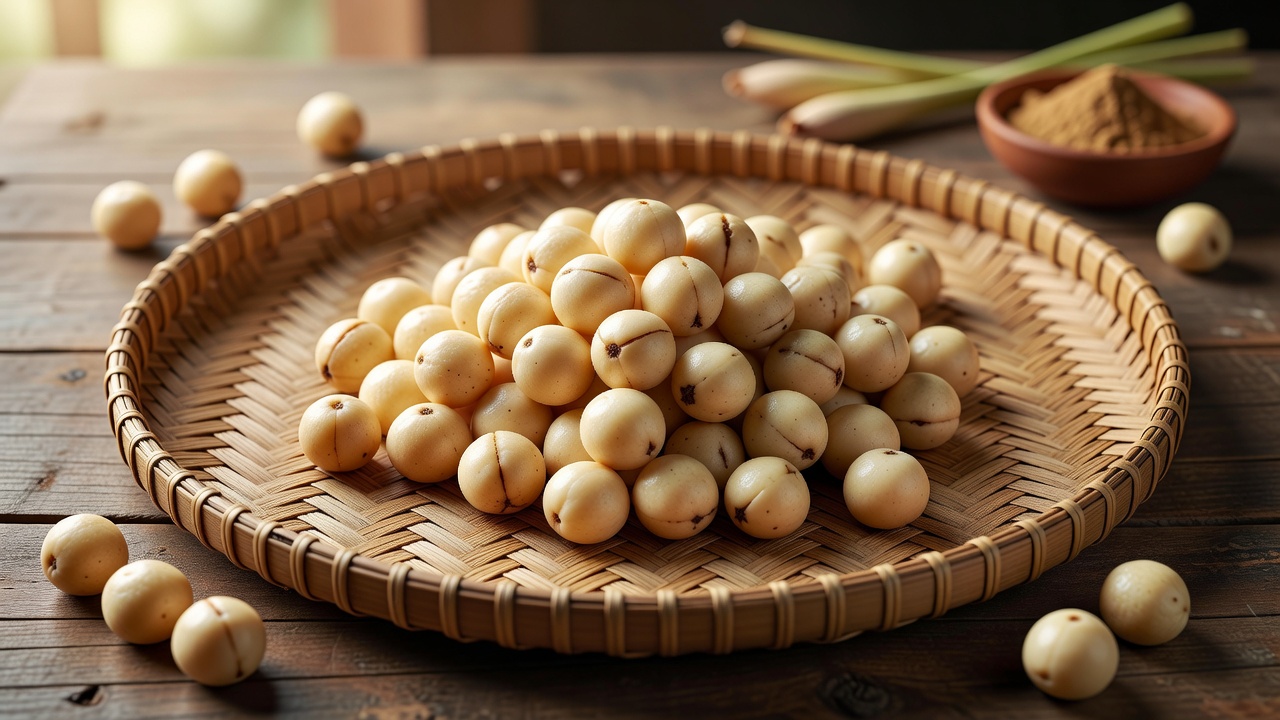
Long before a candlenut kernel meets a vacuum sealer, its fate is decided by the drying process. In Tasikmalaya, our partner farmers harvest mature nuts when the outer husk turns brown and begins to split. The timing is precise: too early and the kernel is underdeveloped; too late and moisture from the ground invites mold. Immediately after cracking, the white kernels are laid on raised bamboo trays under the high-altitude sun. This traditional method, refined over generations, brings the moisture content down from over 25% to a stable 6-8%.
Why is this target critical? At 6-8% moisture, the water activity (aw) drops below 0.65, a threshold where most molds and bacteria cannot grow. TasikSpice enforces this standard with digital moisture meters at our collection centre. Kernels that fail the test are re-dried. This single step is the reason our candlenut Indonesia arrives in export warehouses without the musty smell often associated with lesser origins. For any kemiri spice to survive the tropics, the sun is its first and best preservative.
Optimal Storage Conditions for Extending Shelf-Life
Even perfectly dried candlenut will degrade if stored incorrectly. The golden rule for candlenut bulk storage is: keep it cool, keep it dry, and keep it sealed. Our dedicated warehouse in Tasikmalaya mimics the controlled atmosphere of a modern food facility. Ambient temperature is maintained between 18-22°C, with relative humidity consistently below 60%. Air conditioning alone isn’t enough; we use industrial dehumidifiers during the rainy season to prevent the ambient humidity from creeping back into the kernels.
Stock is always placed on pallets, never directly on concrete floors, to avoid condensation and pest access. Regular aeration is avoided for whole kernels, as constant airflow can introduce moisture and oxygen, accelerating rancidity. Instead, we rely on the next layer of defense: advanced packaging. This disciplined environment allows TasikSpice to confidently store candlenut for months while preserving its signature waxy texture and high oil quality—a crucial advantage for buyers who need to stagger shipments.
Packaging Innovations: From Hermetic Seals to MAP
Traditional jute bags are the enemy of tropical spices. While breathable, they allow moisture and oxygen to freely interact with the kernels, slashing shelf-life to a few weeks in humid climates. For our export-grade candlenut, we deploy multi-layer high-barrier packaging that turns the container into a micro-vault. Each 25kg unit is packed in a bag combining aluminum foil with polyethylene and nylon layers. The foil reflects light and blocks oxygen transmission almost entirely, while the inner layers provide heat-seal integrity.
But we go further. For sensitive destinations or orders that demand extra shelf-life, we offer Modified Atmosphere Packaging (MAP). Before final sealing, the air inside the bag is flushed out and replaced with nitrogen, an inert gas that halts oxidation. Oxygen absorber sachets are added as a fail-safe, scavenging any residual O2 that might sneak in. The result: our Aleurites moluccanus kernels can retain their essential oil profile and pristine white color for over 18 months, even without cold chain. This is not just packaging; it’s an insurance policy for your supply chain.
These innovations reflect our experience as a leading kemiri supplier. We know that a consignment of candlenut leaving Tanjung Priok must arrive in Jeddah or Rotterdam exactly as it left our hands—with a clean cut test, no free fatty acid spikes, and no visible mold. TasikSpice’s FOB commitment means we take full responsibility until the container is on board, but our packaging ensures that quality is maintained long after it crosses the ocean.
TasikSpice’s Integrated Approach to Quality Preservation
Storage and shelf-life optimization is not a single intervention; it’s a chain of decisions that starts in the field and ends at your facility. In the 2026 season, we have expanded our drying platforms and installed a new automatic heat-sealing line to handle increasing demand for candlenut bulk. Every lot is graded for size, color, and oil content before being assigned a batch number for full traceability. Our moisture and mold tests are available to clients upon request, so you can buy with absolute confidence.
From the Tasikmalaya highland to Tanjung Priok, our logistics network is designed to minimize temperature shocks. Trucks are covered with reflective tarps, and we schedule early-morning loading to avoid the midday heat. This attention to detail matters when you’re handling a spice as delicate as candlenut. For our European and Middle Eastern partners, these measures mean a consistent input for their spice blends and sauces—no off-flavors, no rejections.
If you’re sourcing candlenut Indonesia and need a partner who treats preservation as a science, not an afterthought, we invite you to experience the TasikSpice difference. Our 2026 harvest is now available at $6.30/kg FOB Tanjung Priok, with flexible volumes from sample lots to container loads. Contact TasikSpice via WhatsApp to discuss your storage requirements, request a moisture certificate, or place your order. Let’s ensure that every kernel of candlenut you receive is as fresh and potent as the day it was cracked from its husk in the highlands of West Java.
Interested in sourcing premium Indonesian spices?
Contact TasikSpice on WhatsApp for FOB pricing, samples, and MOQ details.