Sun-Dried vs Machine-Dried Cocoa: Moisture Standards for Export
In global spice and cocoa trading, moisture content is the silent arbiter of quality. A fraction of a percent too high, and an entire container of Indonesian Cocoa Beans can be condemned for mold, aflatoxin, or weight disputes. For buyers sourcing bulk cocoa Indonesia, understanding how drying methods affect moisture levels is critical—especially as the 2026 main harvest approaches. At TasikSpice, we combine generations of farming wisdom with modern drying technology to deliver fermented cocoa beans that consistently meet the world’s strictest export standards. In this article, we’ll explore why moisture matters, compare traditional sun-drying to controlled mechanical drying, and reveal how our process ensures your shipment arrives in perfect condition.
Cocoa Beans (known locally as biji kakao) are one of Indonesia’s most valuable spice exports, with the fertile volcanic soils of Sulawesi and Sumatra producing beans prized for their rich, fruity notes. However, even the finest genetics and fermentation are wasted if drying isn’t executed to perfection.
Why Moisture Content Matters for Export-Grade Cocoa Beans
Freshly harvested and fermented cocoa beans contain 55–60% moisture. To be safely shipped as an international commodity, this must be reduced to a maximum of 7.5%—and ideally 7%—according to Indonesia’s SNI 2323:2008 standard and global buyer specifications. Why is this so critical? First, excess moisture invites Aspergillus molds, which produce aflatoxins (regulated below 4 ppb in the EU). A rejected container can cost an importer thousands of dollars in demurrage and disposal. Second, water weight inflates the invoice; when you buy cocoa beans, you’re paying for cocoa solids, not water. Third, proper drying stabilizes the bean’s internal structure and locks in the flavor precursors developed during fermentation. Poorly dried fermented cocoa can develop off-notes like smokiness, hammy, or acidic sharpness that ruin chocolate profiles. Therefore, moisture control is not just a logistics metric—it is the guardian of quality and profitability.
Sun-Drying vs Mechanical Drying: A Technical Comparison
Two primary methods dominate Indonesian cocoa processing: sun-drying and mechanical drying. Each has distinct advantages and challenges for export-grade beans.
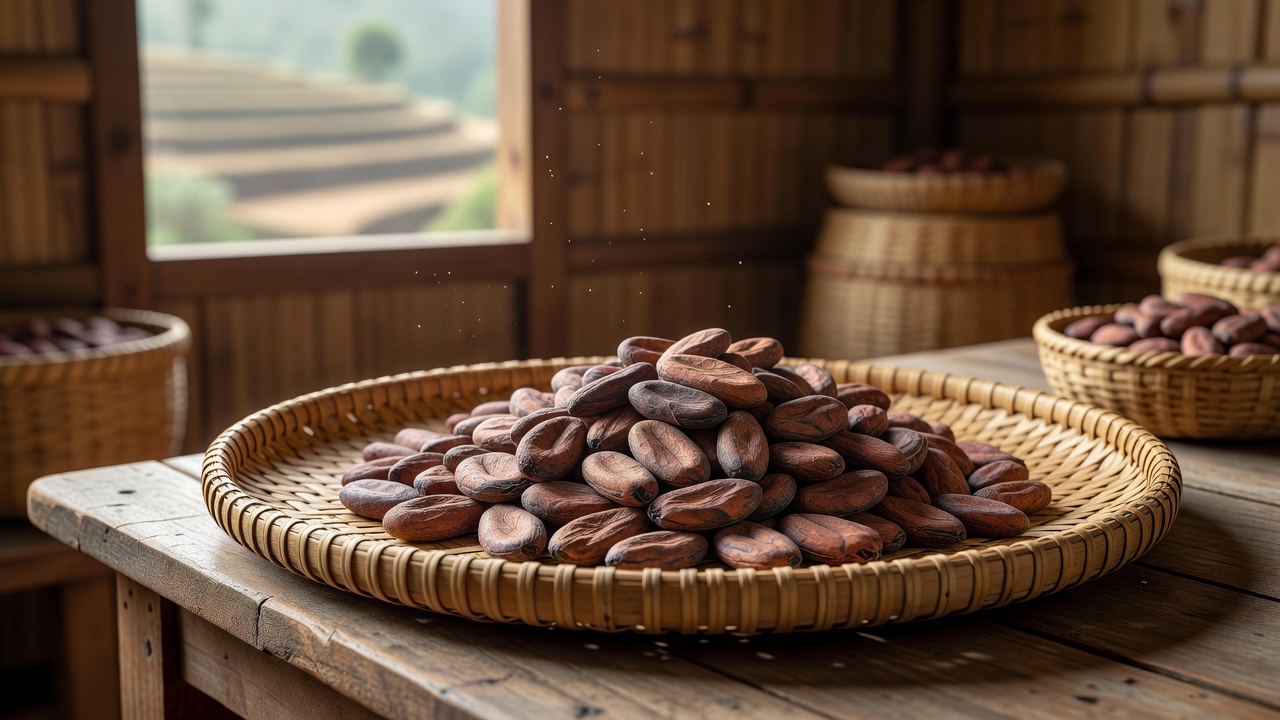
Sun-drying is the traditional method, practiced for centuries on smallholder farms. Beans are spread on raised bamboo mats, concrete patios, or drying tables, turned frequently under direct sunlight. The process relies entirely on solar energy, making it low-cost and sustainable. The gentle heat (typically 35–45°C) is believed by some chocolatiers to preserve delicate fruity and floral aromas. However, sun-drying is slow (5–10 days), highly weather-dependent, and vulnerable to sudden tropical rains that can re-wet a batch and invite mold. Contamination from dust, birds, or insects is a constant risk, and uneven sun exposure often leads to mixed moisture levels within a single lot—some beans may be over-dried while others remain dangerously moist. For bulk cocoa Indonesia destined for high-value markets, this variability can be unacceptable.
Mechanical drying, by contrast, uses forced hot air in batch or continuous dryers. Temperature and airflow are precisely controlled, and the process can reduce moisture from 55% to 7% within 24–48 hours. Modern fluidized-bed dryers and rotary dryers deliver uniform drying, independent of weather, and can be fitted with dehumidifiers to speed moisture removal even in humid coastal conditions. The downside is capital and energy cost, and if dryer temperatures exceed 60°C, ‘case hardening’ occurs—the surface dries and seals, trapping moisture inside and causing split beans. Moreover, overly aggressive drying can degrade volatile aromatic compounds, giving the cocoa a flat or baked flavor. A 2025 study by the Indonesian Coffee and Cocoa Research Institute found that beans mechanically dried at 50°C with a step-down humidity profile retained more polyphenols than sun-dried beans exposed to intermittent rain cycles. Thus, the best approach often combines both methods.
How TasikSpice Guarantees Perfect Moisture for Bulk Cocoa Buyers
At TasikSpice, we’ve engineered a hybrid drying protocol that captures the flavor benefits of sun-drying and the precision of mechanical finishing. Here’s how we ensure every kilogram of our export Cocoa Beans meets the tightest moisture specifications for the 2026 season.
We source exclusively fully fermented beans from partner cooperatives in Sulawesi and Sumatra. Immediately after fermentation, beans are transported to our central processing facility. There, they undergo an initial sun-drying phase on raised, covered mesh racks for 3–4 days, which reduces moisture to around 18–20%. This gentle phase helps set the chocolate precursors without roasting the beans. Then, the beans enter our custom-designed fluidized-bed dryer, which uses thermostatically controlled air at 48–50°C and 40% relative humidity. A programmable logic controller (PLC) ramps the drying in three stages to avoid stress cracks. We monitor moisture continuously with an in-line GAC 2500 digital moisture analyzer; every batch is sampled at three depths and verified in our ISO 22000-certified lab using the oven-drying reference method. The final product consistently tests between 6.8% and 7.2% moisture. Additionally, our storage warehouse is climate-controlled at 60% RH and 25°C, preventing post-drying re-absorption. In 2026, we’re commissioning a solar-assisted tunnel dryer that will cut energy use by 30% while maintaining our exacting standards. This unwavering commitment means that when you order bulk cocoa Indonesia from TasikSpice, you receive uniform, stable beans that will withstand the rigors of ocean freight and meet the phytosanitary and aflatoxin limits of your destination country.
Ready to secure your supply of premium Indonesian cocoa? Contact TasikSpice today on WhatsApp at +62 812-9869-9940 for FOB pricing, sampling, and shipment bookings from Tanjung Priok, Jakarta. Our 2026 contracts are open—don’t let moisture variability compromise your next chocolate batch.
In the dynamic market for Indonesian cocoa export, consistency is king. By mastering the art of controlled drying, TasikSpice ensures that the rich, fermented character of our Cocoa Beans is locked in—from the fertile highlands of Sulawesi and Sumatra right to your factory door. Whether you need a single container or a year-round supply contract, our moisture control protocols give you confidence in every bean. Reach out to us on WhatsApp at +62 812-9869-9940 and let’s discuss how we can support your sourcing needs in 2026 and beyond.
Interested in sourcing premium Indonesian spices?
Contact TasikSpice on WhatsApp for FOB pricing, samples, and MOQ details.