Traceable Indonesian Cocoa Beans: From Farm to Blockchain
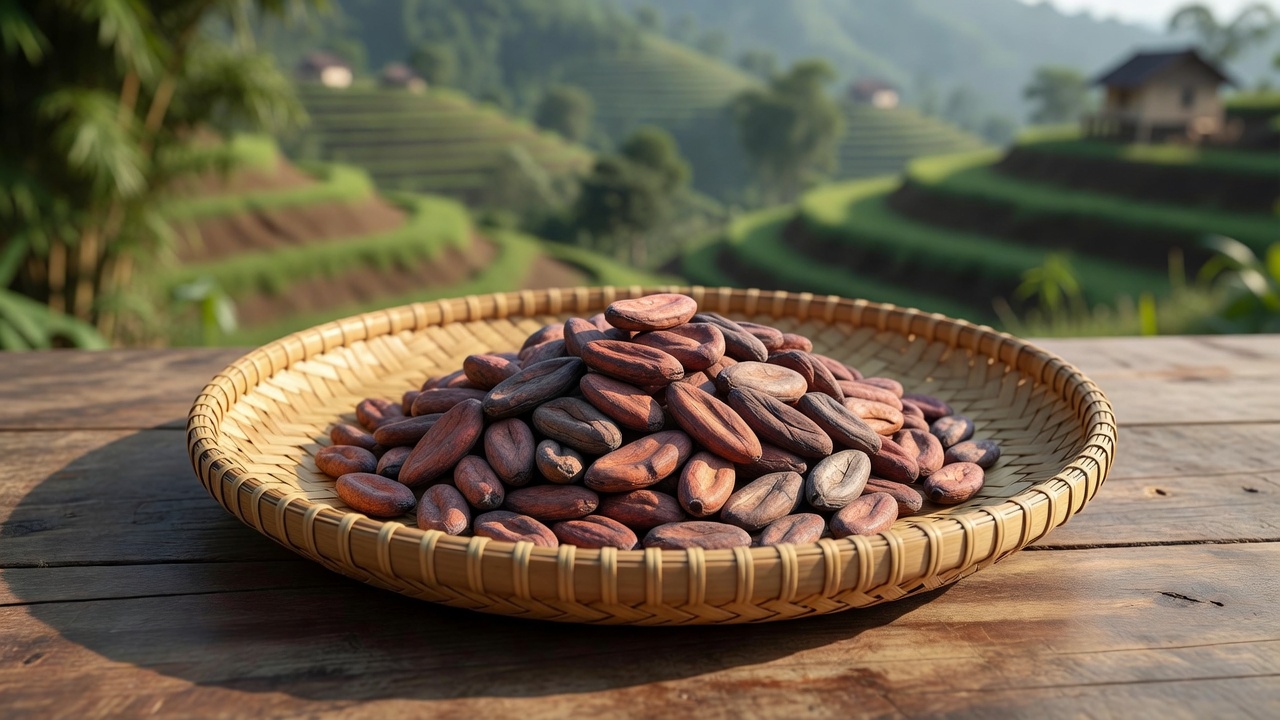
A shipment of cocoa beans can carry an attractive origin label and still leave a buyer with unanswered questions: Which farms supplied it? Were the beans fermented consistently? Did the inspected sample represent the cargo loaded for export? For international buyers, these questions connect directly to quality, compliance, and commercial risk. Indonesian cocoa beans, known locally as Biji Kakao, come from Theobroma cacao and offer an opportunity to connect purchasing decisions with documented production histories. For the 2026 season, the practical goal is clear: make each important claim traceable to evidence.
TasikSpice, an Indonesian exporter based in Tasikmalaya, West Java, offers a sourcing conversation around cocoa origins in Sulawesi and Sumatra. Buyers should distinguish the exporter’s location from the beans’ growing origin and request lot-specific confirmation. This article explains what a credible traceability system should demonstrate; it does not imply that every available lot already has blockchain records or certification.
Traceable Cocoa Beans: Building a Farm-to-Fork Record
Traceability starts with a defined lot, not a QR code. A useful record connects a farm or farmer group to collection, fermentation, drying, storage, aggregation, and shipment. Each transfer should preserve the identity of the beans or document exactly how separate inputs became a new combined lot. Without those links, an export batch number identifies inventory but may reveal little about its origin.
For Sulawesi cocoa, buyers should request sourcing information at an appropriate level of detail: province, district, farmer group, and farm identifiers where available. Sumatra-origin purchases deserve the same discipline. Recording only “Indonesia” is insufficient when a purchasing policy requires farm-level checks. Where plot geolocation is required, exporters and buyers should establish how coordinates are collected, validated, protected, and linked to the physical supply.
Harvest records provide the first quality context. Mature, healthy pods should be harvested and opened with care to avoid damaging beans. Producers should separate diseased material and record collection dates. Delays, mixed harvest batches, and inconsistent handling can affect the material entering fermentation. A traceable system makes those variations visible instead of hiding them behind a single origin description.
Aggregation is a critical checkpoint. A cooperative may combine deliveries from many smallholders, while a warehouse may consolidate several fermentation batches. Both practices can be commercially necessary, but each combined lot needs a documented relationship to its inputs. Buyers must also distinguish physically segregated supply from mass-balance accounting, which does not necessarily mean the delivered beans came exclusively from the farms associated with a claim.
- Origin: Farm or group identifiers, sourcing area, and relevant harvest dates.
- Processing: Fermentation batch, drying method, dates, and responsible operator.
- Movement: Delivery receipts, weights, warehouse locations, and transfer records.
- Verification: Sampling references, inspection results, and applicable certification details.
- Export: Bag marks, container number, seal number, and shipment document references.
Blockchain and Fermented Cocoa: Verify the Evidence
Blockchain can provide a shared, tamper-evident record of supply-chain events. Participants may register a delivery, processing event, inspection result, or custody transfer so that later alterations become detectable. Some systems store documents separately and place a digital fingerprint on the ledger. This can help establish that a document has not changed, but buyers still need access to the original document and its relevant lot reference.
The limitation matters: blockchain does not prove that an initial entry was true. Incorrect farm coordinates, inaccurate weights, or a laboratory report attached to the wrong lot can remain incorrect on a ledger. Reliable transparency therefore depends on trained operators, physical identification, calibrated equipment, independent checks where appropriate, and procedures for recording corrections. A conventional database with strong controls can also provide effective traceability.
For fermented cocoa, processing records should explain what happened to the beans. Useful fields include fermentation start and finish dates, vessel or box identification, turning practices, and temperature observations where monitored. Duration alone is not proof of adequate fermentation because bean variety, batch size, weather, and process management influence the outcome. Buyers should connect these records to representative quality testing.
A cut test helps assess internal bean characteristics, including fermentation-related appearance and defects such as slaty, moldy, or insect-damaged beans. It should follow an agreed sampling and assessment method. Sensory evaluation of a prepared sample provides additional insight into flavor suitability. Neither a blockchain entry nor an attractive fermentation percentage replaces the buyer’s specification and acceptance procedure.
Export specifications should address moisture, bean count, foreign matter, broken beans, and defect limits. Many buyers seek moisture around 7–7.5%, but the contractual limit and measurement method must be agreed. Applicable standards, including ISO 2451 for cocoa bean specifications and quality requirements, can provide a reference. Contaminant testing, including cadmium where relevant, should reflect destination rules and intended use; bean specifications should not be confused with legal limits for finished chocolate products.
Choosing a Cocoa Beans Supplier for the 2026 Season
When evaluating a cocoa beans supplier, request a sample traceability file alongside the physical sample. Follow one lot backward from its proposed shipment identity to processing and origin records. Check whether dates align, quantities reconcile with documented processing losses, and quality reports identify the correct batch. Ask how substitutions are handled after sample approval and how the exporter prevents an approved lot from being mixed with unapproved stock.
For European business, cocoa falls within the commodity scope of the EU Deforestation Regulation. Buyers should confirm the applicable obligations and implementation timetable at the transaction date using official guidance. Blockchain is not itself a compliance certificate. Where required, geolocation, legality evidence, deforestation checks, and due-diligence records must meet the relevant rules regardless of the technology used to store them.
Export logistics should preserve both quality and identity. Agree on clean, food-suitable packaging, bag marks, net weights, and any liners. Containers should be dry, clean, odor-free, and inspected before loading, with moisture-management measures appropriate to the voyage. The commercial invoice, packing list, bill of lading, and any required origin or phytosanitary documents should be mutually consistent. Confirm destination-specific documentation before dispatch.
TasikSpice pricing is available on request, FOB Tanjung Priok, Jakarta. A meaningful quotation should specify origin, fermentation status, quality limits, quantity, packaging, shipment window, and quotation validity. Under FOB, the seller delivers the goods on board the buyer-nominated vessel at the named port; the buyer generally arranges the main ocean carriage. For containerized shipments handed over before loading, discuss whether FCA better matches the actual delivery arrangement.
For your 2026 purchasing program, contact TasikSpice on WhatsApp to request current cocoa beans availability, an FOB quotation, sample arrangements, and the traceability records available for the proposed lot. Share your destination, volume, and acceptance criteria so the offer can address both processing quality and evidence requirements.
Interested in sourcing premium Indonesian spices?
Contact TasikSpice on WhatsApp for FOB pricing, samples, and MOQ details.