Negotiating Vanilla Bean Prices: A Buyer's Guide for 2026
Few spices punish unprepared buyers like vanilla. A kilogram of premium pods can swing by several hundred dollars within twelve months, and the difference between a profitable purchase and an expensive mistake usually comes down to timing, market knowledge, and contract structure. Known locally as vanili, Vanilla planifolia grown in the highlands of Java and Bali has become a strategic alternative origin for buyers seeking stability beyond Madagascar's dominance. In this guide, TasikSpice breaks down how vanilla prices actually move, when seasonal premiums appear, and why long-term agreements with a dependable vanilla pod supplier consistently outperform opportunistic spot buying.
Why Vanilla Bean Prices Fluctuate — and How to Read the Cycle
Vanilla behaves unlike almost any other agricultural commodity. Every cured bean on the market today was hand-pollinated nine to twelve months earlier and then cured for another three to six months. That long production pipeline means supply cannot respond quickly when demand shifts, so prices overreact in both directions. Four forces drive most of the movement:
- Supply concentration: Madagascar still produces roughly 80% of the world's vanilla. Cyclones striking the SAVA region between January and March have historically triggered global spikes — the 2018 peak near $600 per kilogram remains fresh in every buyer's memory.
- Curing bottlenecks: after a strong harvest, curing capacity becomes the constraint, creating a lag between rising farm-gate prices and export quotations.
- Speculative stockpiling: when prices climb, farmers and collectors hold green beans back, amplifying volatility.
- Quality spread: Grade A gourmet pods (30–35% moisture, 15 cm and longer) and Grade B extract beans (15–25% moisture) trade at entirely different levels, and mixed lots distort headline prices.
For buyers sourcing bulk vanilla Indonesia, the most valuable insight is that the Indonesian supply cycle does not perfectly mirror Madagascar's. That offset gives informed buyers genuine negotiation leverage.
Seasonal Premiums and the 2026 Indonesian Harvest Calendar
In Java and Bali, vanilla flowers are hand-pollinated over several months, green beans are harvested from roughly June through September, and curing — killing, sweating, sun-drying, and conditioning — takes another three to six months. Mapping that cycle onto your procurement calendar shows exactly when premiums appear.
The value window: October through February. As freshly cured lots from the 2026 harvest reach exporter warehouses, competition among Indonesian vanilla export houses is strongest, moisture content sits at its optimal 30–35%, and buyers comparing FOB Tanjung Priok quotations typically find the year's most competitive pricing.
The premium window: March through May. By this point, cured stocks have thinned and remaining Grade A inventory carries a premium — often 10–20% above post-harvest levels. Buyers who wait until this window to negotiate are negotiating from weakness.
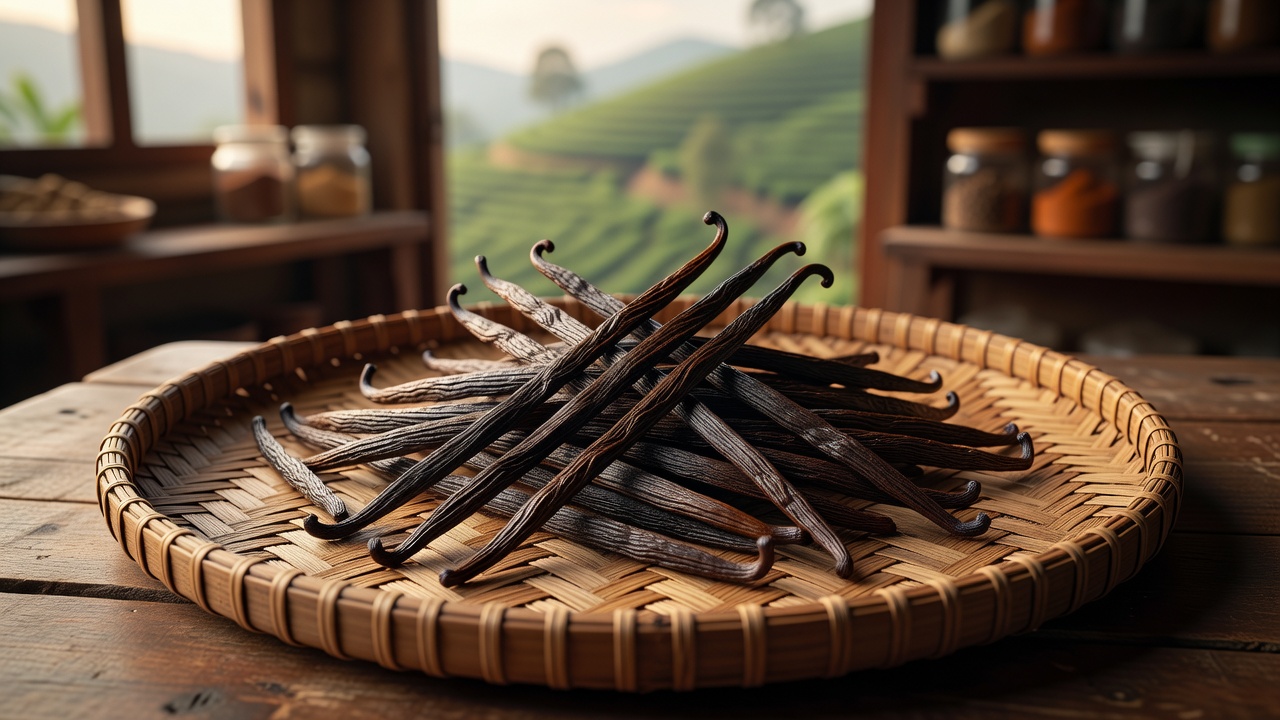
Bali vanilla beans deserve a separate note. Volumes are smaller and farming is concentrated among smallholders who cure with meticulous traditional methods, producing dark, supple, intensely aromatic pods that gourmet buyers prize. They command a premium, but the consistency justifies it for premium retail and artisanal food brands.
Want current-season pricing before the premium window opens? Message TasikSpice on WhatsApp at +62 812-9869-9940 to receive Grade A samples and the 2026 harvest availability list.
Long-Term Contracts: A Buyer's Guide to Better Vanilla Pricing
Spot buying feels flexible, but in vanilla it exposes you to the worst of the market — you purchase when stocks are thin and sellers hold the leverage. A structured annual or multi-shipment agreement with an established vanilla pod supplier converts that volatility into predictability:
- Price stability: fixed pricing, or a transparent formula pegged to harvest timing, protects your food-cost planning from cyclone-season shocks.
- Allocation priority: in short-supply years, contract clients are served before spot buyers — an advantage that has kept many manufacturers out of production gaps.
- Consistent grading: the same curing team and the same specification sheet — length, moisture 30–35%, vanillin content 1.6–2.4% — shipment after shipment.
- Logistics efficiency: consolidated monthly or quarterly shipments under FOB Tanjung Priok terms reduce freight and documentation overhead.
TasikSpice structures 2026-season forward contracts for buyers of bulk vanilla Indonesia, from single-container programs to scheduled quarterly deliveries. Every contract is signed against verifiable grade specifications, and clients receive pre-shipment samples drawn from the actual contracted lots — never showroom stock.
Before signing any agreement, run this quick checklist:
- Confirm grade specifications in writing: pod length, moisture, vanillin content, and defect allowance.
- Ask when the beans were harvested and how long they were cured.
- Request samples from the specific lot you will receive, not generic samples.
- Compare FOB Tanjung Priok prices on equivalent grades, not headline numbers.
- Consider splitting volume: a small spot purchase now, a forward contract for the next season.
To discuss contract structures or request a quotation, contact the TasikSpice export desk directly on WhatsApp at +62 812-9869-9940.
Vanilla rewards buyers who respect its rhythm. Understand when the 2026 Indonesian harvest cures, price against equivalent grades rather than headline figures, and lock in contract terms before the March premium window. Do that, and the world's second most expensive spice becomes one of the most predictable lines in your procurement budget. TasikSpice is ready to support your program with samples, full specifications, and transparent FOB Tanjung Priok pricing from Java and Bali.
Interested in sourcing premium Indonesian spices?
Contact TasikSpice on WhatsApp for FOB pricing, samples, and MOQ details.