Vanilla Beans COA: A Buyer's Guide to Quality Results
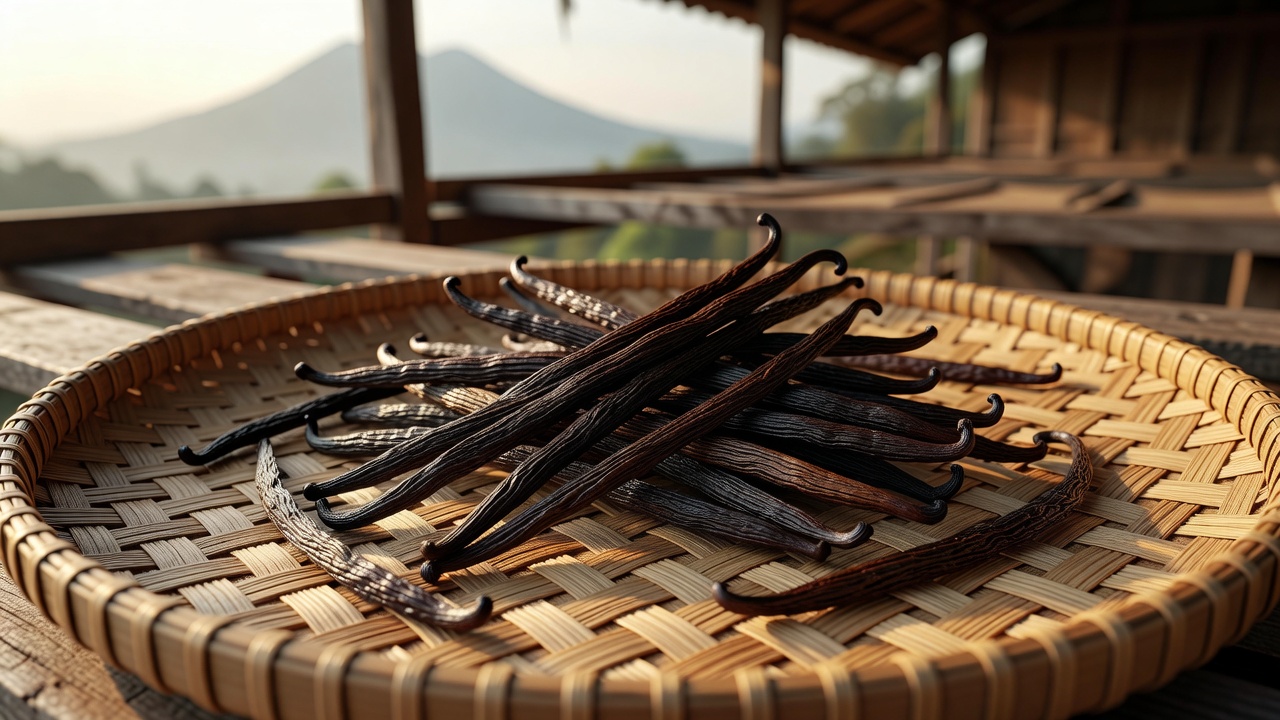
A batch of vanilla beans can look beautiful and still miss your purchasing specification. The difference may be hidden in a moisture result, an unclear vanillin measurement, or a laboratory report that belongs to another lot. For buyers sourcing Indonesian vanilla beans, known locally as vanili, a Certificate of Analysis (COA) is most useful when you understand what it proves—and what it leaves unanswered.
For the 2026 season, this guide from TasikSpice explains how to evaluate COAs for Vanilla planifolia from Java and Bali. Whether you purchase whole beans for retail or extraction material for manufacturing, the objective is the same: connect a representative sample, a reliable test method, and an agreed specification to the shipment you will receive.
Start with Traceability on Your Vanilla Beans COA
A COA summarizes analytical results for an identified sample. It is not automatically an independent certificate, an origin guarantee, or proof that every carton meets specification. Some suppliers issue COAs using internal testing; others reproduce results from external laboratories. Establish who performed each test and request the underlying laboratory report when the purchasing risk warrants it.
First, match the document to the offered goods. Look for the product name, botanical identity, whole or cut bean format, lot number, sample identification, report number, and testing dates. The lot identifier should connect to the packing list and carton labels. If a shipment combines several production lots, clarify whether each was tested or whether the report describes a composite sample.
- Origin: Java or Bali should be supported by sourcing and traceability records. Routine moisture and vanillin tests cannot establish geographic origin.
- Sampling: Ask who collected the sample, how many packages were sampled, and whether collection occurred before or after final conditioning and packing.
- Laboratory competence: ISO/IEC 17025 accreditation is useful evidence, but check that the relevant test falls within the laboratory's accredited scope.
- Timing: Compare sampling, testing, packing, and shipment dates. Extended storage or subsequent processing may justify additional verification.
For Bali vanilla beans, regional identity can be commercially valuable, but it does not replace lot-specific quality evidence. Equally, a report issued in 2026 does not necessarily establish a 2026 harvest. Ask the supplier to distinguish harvest dates, curing completion, and the date the goods became ready for sale.
Read Cured Vanilla Results, Units, and Tolerances
Harvest maturity and post-harvest handling shape the results you see. Beans harvested at suitable maturity undergo killing, sweating, drying, and conditioning to develop the characteristic aroma of cured vanilla. Differences in these stages influence moisture, flexibility, aroma, and storage performance. A COA captures selected properties after processing; it cannot fully describe the quality of that processing.
Moisture: Request the percentage, method, and reporting basis. Oven-based loss-on-drying methods and water-specific methods do not necessarily measure exactly the same thing in an aromatic product. Higher-moisture beans may suit some whole-bean applications, while extraction buyers may prefer drier material. Neither preference creates a universal grade standard. Agree on the acceptable range for your application before ordering.
Water activity: This measures water availability rather than total water content. Two lots with similar moisture can have different water activity. Where storage stability matters, consider specifying both measurements, along with packaging and storage conditions. A water-activity result supports risk assessment but does not replace microbiological testing or validated handling controls.
Vanillin: Check whether the result is reported as a percentage, g/kg, or mg/kg, and whether it refers to beans as received or dry matter. These bases can produce substantially different numbers. For illustration, 1.5% vanillin on an as-received basis at 30% moisture converts to approximately 2.14% on a dry-matter basis: 1.5 ÷ 0.70. This is a calculation example, not a TasikSpice specification or a universal acceptance threshold.
Ask for the analytical method, commonly an appropriate chromatographic method such as HPLC, and compare results obtained on compatible bases. Vanillin is an important marker, but vanilla aroma includes many compounds. A higher vanillin result alone does not establish better flavor, authenticity, or suitability for your formulation.
Microbiology and contaminants: The testing panel should reflect the intended use, destination requirements, and buyer specification. It may include aerobic counts, yeast and mold, specified pathogens, pesticide residues, and relevant heavy metals. A pathogen result such as “not detected in 25 g” describes the tested portion; it is not proof of absolute absence throughout the shipment.
For chemical results, “ND” usually means not detected under the stated method conditions. Ask for detection or quantification limits and the substances included in the panel. A report cannot demonstrate compliance with a numerical limit if the method cannot measure sufficiently below that limit. Check current destination rules for the applicable commodity classification rather than assuming one country's requirements apply everywhere.
Tolerances and decision rules: Distinguish a commercial specification from a legal limit and from measurement uncertainty. Suppose your contract sets maximum moisture at 30.0%, and a result is 30.2%. Do not automatically accept it as “close enough.” Agree beforehand how uncertainty, rounding, retesting, and acceptance decisions will be handled. Measurement uncertainty is not permission to exceed a legal limit.
Red Flags When Buying Bulk Vanilla Indonesia
When evaluating offers for bulk vanilla Indonesia, watch for missing lot numbers, unexplained changes in reporting units, absent test methods, and broad “pass” statements without results. Identical results across successive lots deserve clarification, although repetition alone does not prove misconduct. Verify questionable reports directly with the issuing laboratory through independently confirmed contact details.
Also be cautious when “Grade A” or “Grade B” appears without a definition. Vanilla grades are commercial descriptions that can vary between suppliers. Specify bean length, moisture range, split-bean allowance, visible defects, foreign matter, and sensory expectations separately. Inspect representative samples alongside laboratory results; suspected mold or unusual surface deposits require investigation rather than assumptions based on photographs.
Before shipment, connect the approved lot to food-contact packaging, carton identification, storage instructions, and dispatch records. Agree who pays for destination testing, how retained samples are sealed and stored, and what happens if results differ. A COA complements the invoice, packing list, and any required origin or phytosanitary documentation; it does not replace them.
TasikSpice welcomes inquiries for Indonesian vanilla from Java and Bali. Pricing is available on request, FOB Tanjung Priok, Jakarta, and should be evaluated against the agreed grade, quantity, testing scope, packaging, and shipment schedule. Under FOB, buyers should account separately for main carriage, insurance arrangements, and destination costs.
Preparing a 2026 purchase? Contact TasikSpice on WhatsApp with your destination, intended use, order volume, and required analytical limits to discuss available lots, COA documentation, representative samples, and a specification-based quotation.
Interested in sourcing premium Indonesian spices?
Contact TasikSpice on WhatsApp for FOB pricing, samples, and MOQ details.